Handpicked for you
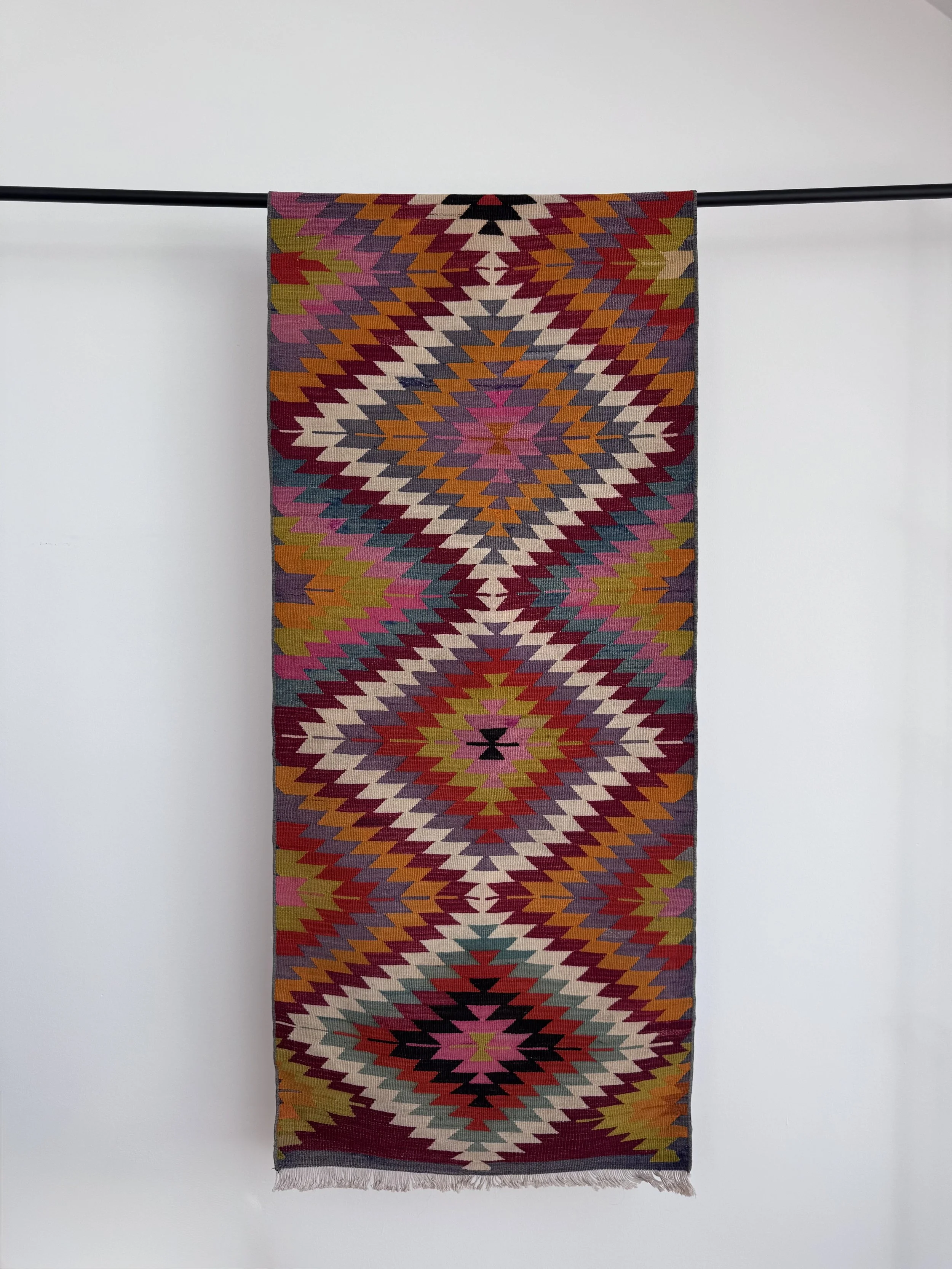
≈ 363 × 80 cm
No beginning, no end. The diamond pattern repeats across the entire field — each one slightly different in color, endlessly unfolding. A kilim that fills a room before you've finished looking at it.
Handcrafted in Denizli (Turkey)
Vibrant synthetic dyes in pink, orange and olive — mid-20th century Anatolian weaving at its most expressive
One of a kind — never repeated, never mass-produced
Vintage, mid-20th century — carrying the boldness of its time
High-quality wool, built to last generations
An electric piece, ready to find its next home.
Dominating motif: Diamond (Elmas) — the repeating diamond, one of the oldest structural principles in Anatolian kilim weaving, here rendered in an endless, hypnotic pattern across the entire field.
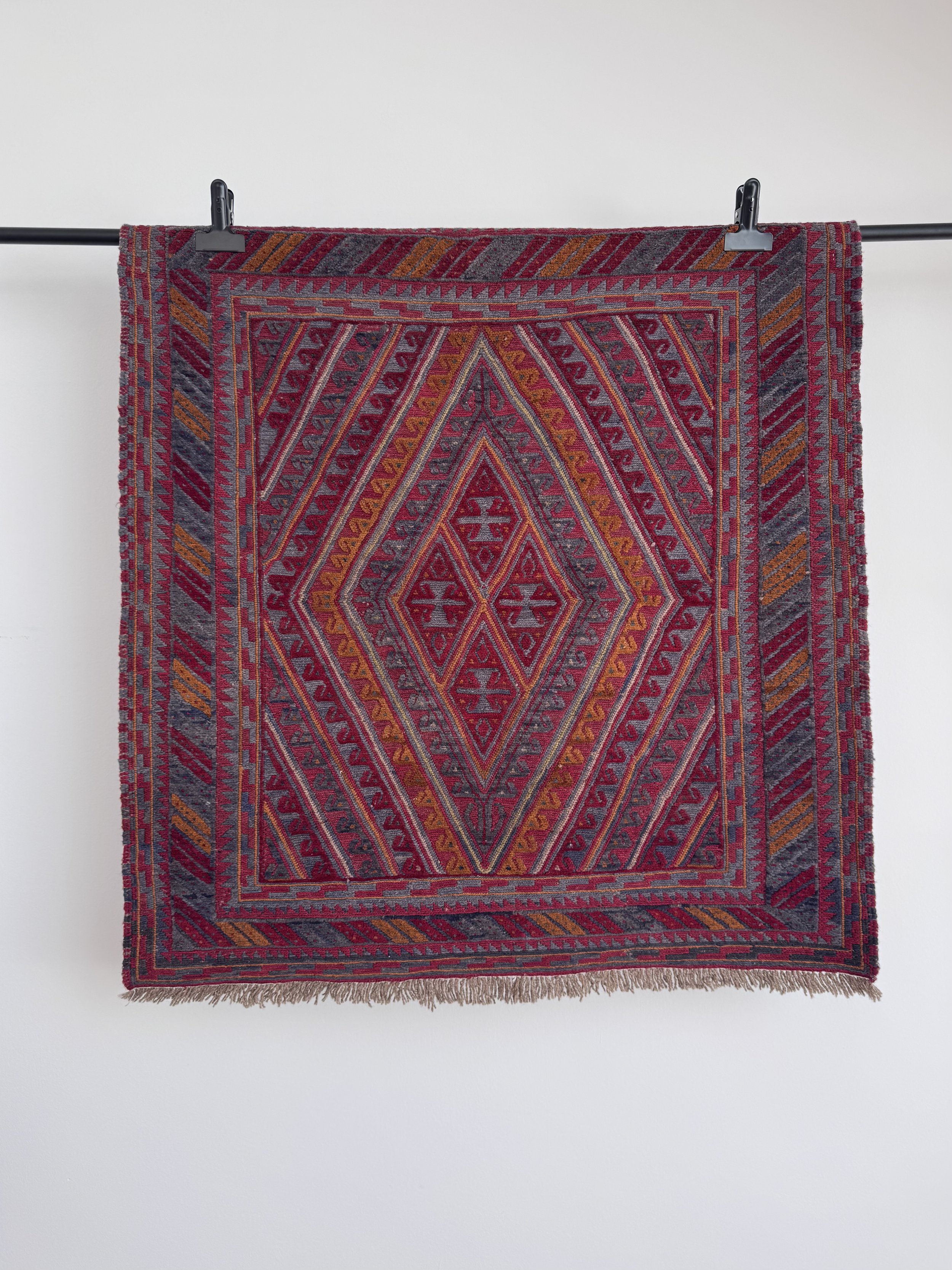
≈ 126 × 117 cm
Not just a kilim - a Kurdish tribal cicim. A rarer weaving technique where additional threads are hand-worked into the surface, creating texture and depth that tells its own story.
One central diamond, layer after layer, drawing the eye inward. The border holds it — dense, diagonal, unwavering.
Handcrafted by Kurdish tribal people using the traditional cicim technique with supplementary weft threads
Naturally dyed in deep crimson, amber gold and slate grey
One of a kind — never repeated, never mass-produced
Vintage — carrying the patina and warmth of serious age
High-quality wool, built to last generations
A commanding piece, ready to find its next home.
Dominating motif: Hands on Hips within the hook (Elibelinde & Çengel) — at the heart of the concentric diamond sits the elibelinde, hands on hips, one of the oldest symbols of feminine strength and fertility in Anatolian weaving. The surrounding hook motifs form a protective frame around her.
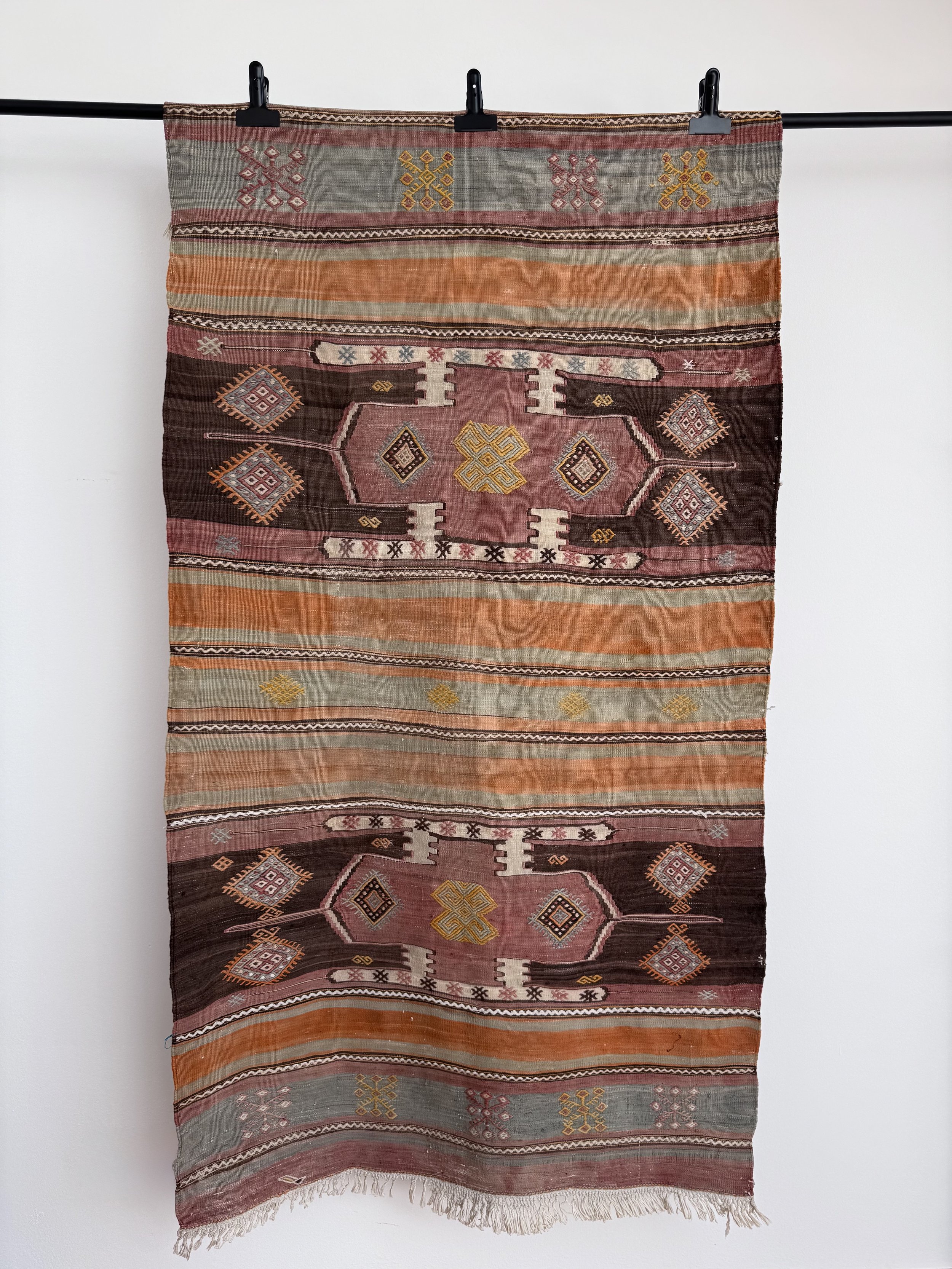
≈ 202 × 114 cm
Time has touched this kilim and left it more beautiful than it found it. Stripes of abrash — rose deepening to burgundy, sage shifting to grey — carry two dark medallion fields where stars and hooked forms float like memories half-remembered. At the hem, hand-knotted fransen that took as long to make as some kilims take to weave.
This is what a hundred years looks like on wool.
Handcrafted in Sivas (Turkey)
Antique — late 19th century, carrying a century of light and use
Naturally dyed in aged rose, burnt orange and slate blue-green — colors worn luminous by time
Warm undyed natural wool throughout — honest to its core
Woven in the cicim technique with hand-knotted fransen — a level of craft rarely seen
One of a kind — never repeated, never mass-produced
Fine, aged wool — a living document of Anatolian textile tradition
A piece of rare beauty, ready to find its next home.
Dominating motif: Yıldız (Star) — four-pointed star forms float at the center of two large medallion fields, each one woven in the cicim technique with a precision that speaks of long tradition. Surrounded by elibelinde-inspired hooks and small gül medallions, the stars anchor a composition held together by light, time and abrash.
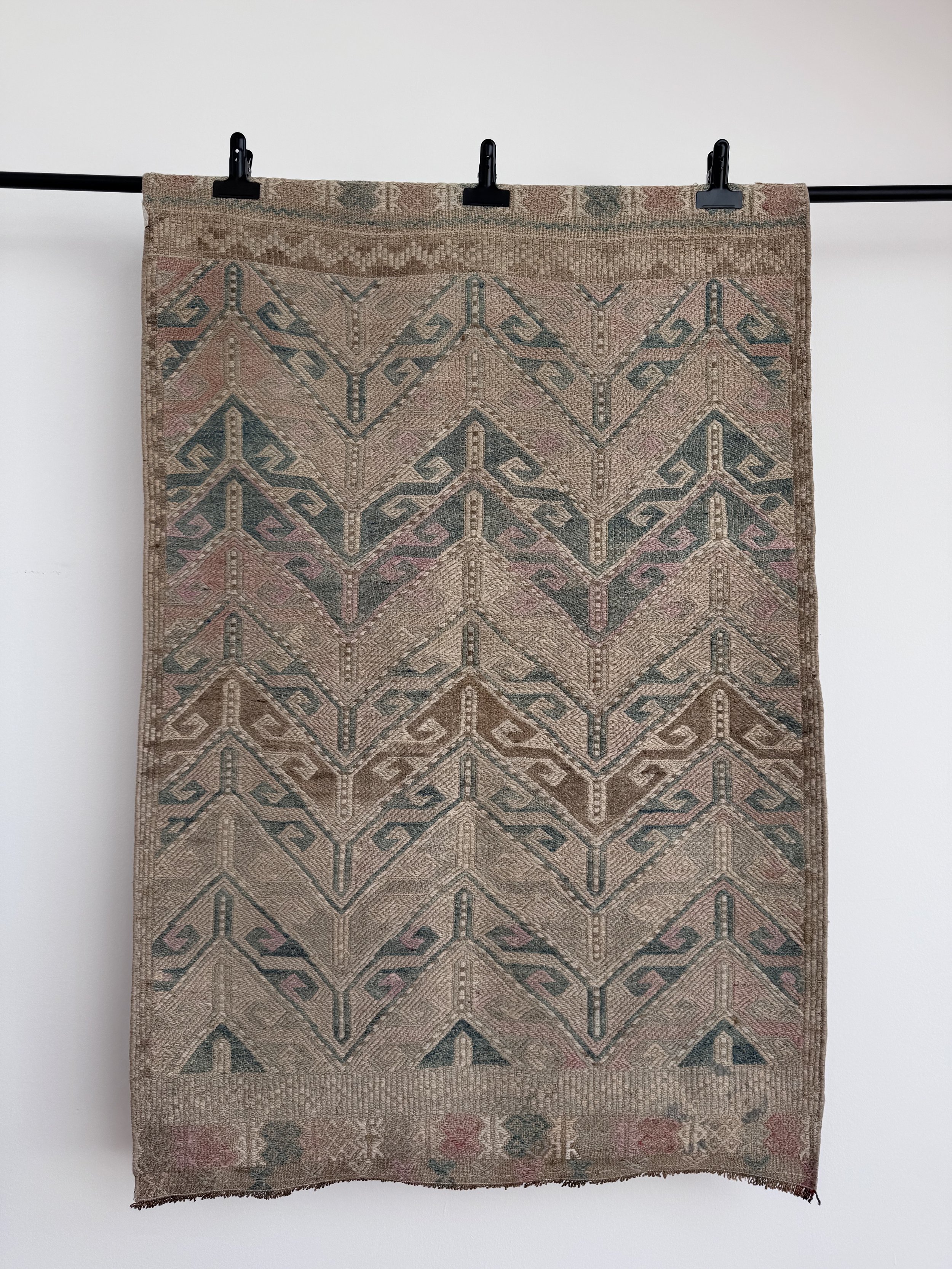
≈ 169 × 111 cm
Chevrons rising like mountains across a warm sand ground — each one edged with hooks that curl outward like branches reaching for light. At the borders, small figures stand sentinel, watching over the field from above and below.
This kilim whispers. You have to lean in to hear it.
Handcrafted in Mut (Turkey)
Antique — late 19th century, carrying the quietude of another era
Naturally dyed in faded indigo blue-green and aged dusty rose — colors worn soft by time
Warm undyed sand and natural camel wool as ground — honest and unadorned
Woven in the rare cicim technique — additional weft threads floating above the surface, creating depth and texture in every motif
One of a kind — never repeated, never mass-produced
Fine, densely woven wool — built to outlast everything
A piece of rare quietude, ready to find its next home.
Dominating motif: Çengel (Hook) — large stacked chevron forms rise across the full field, each one edged with outward-curling hooks. The çengel, one of the most protective symbols in Anatolian weaving, is here not just a border element but the architecture of the entire composition.
RUGS OF NUMI
Where textile history meets everyday life.
We collect handwoven kilims — most of them rooted in the ancient weaving traditions of Anatolia — pieces that carry culture, symbolism, and the quiet work of skilled hands.
No two alike. No mass production. Just craft.
Follow us on instagram