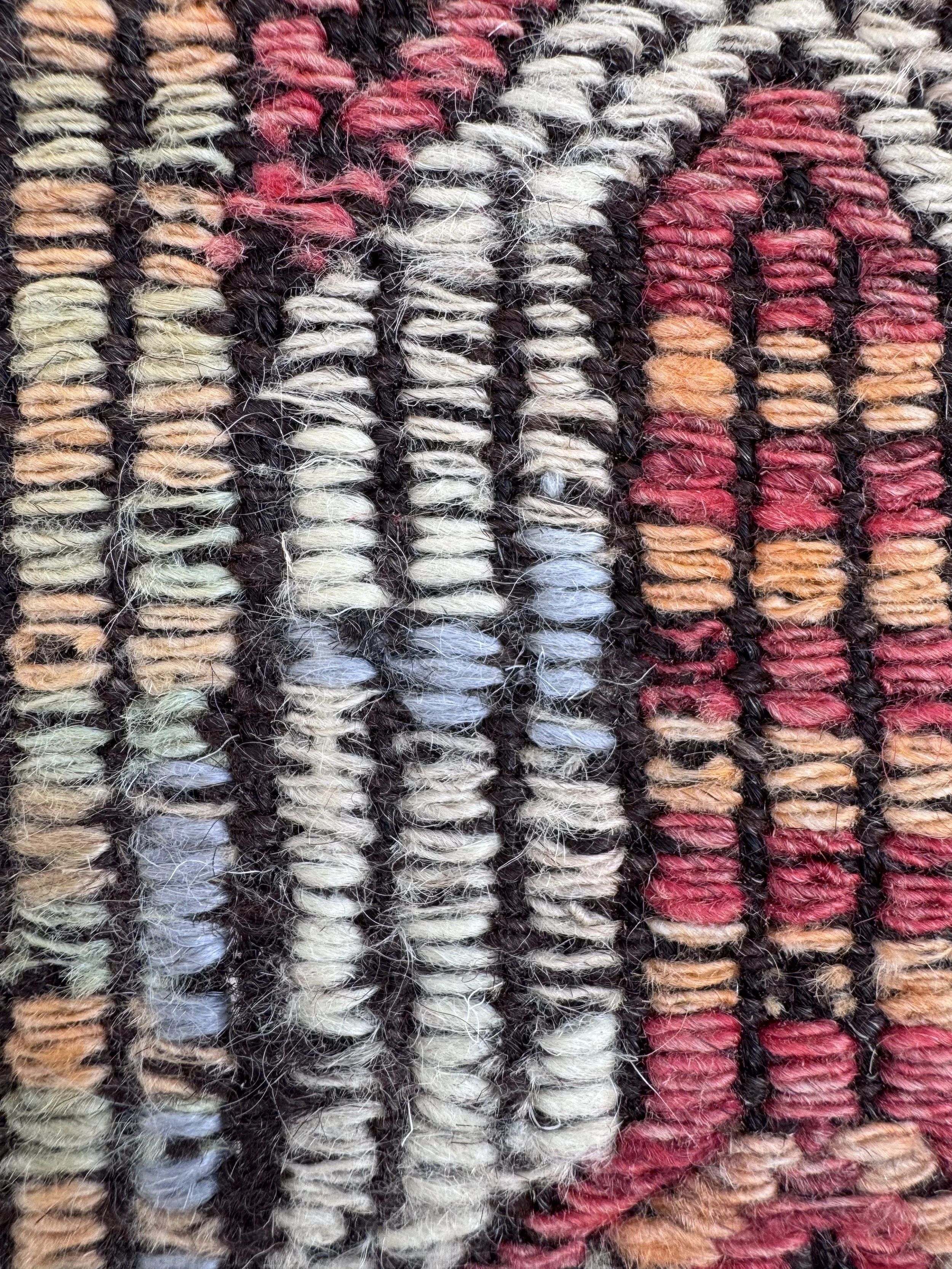
 Image 1 of 4
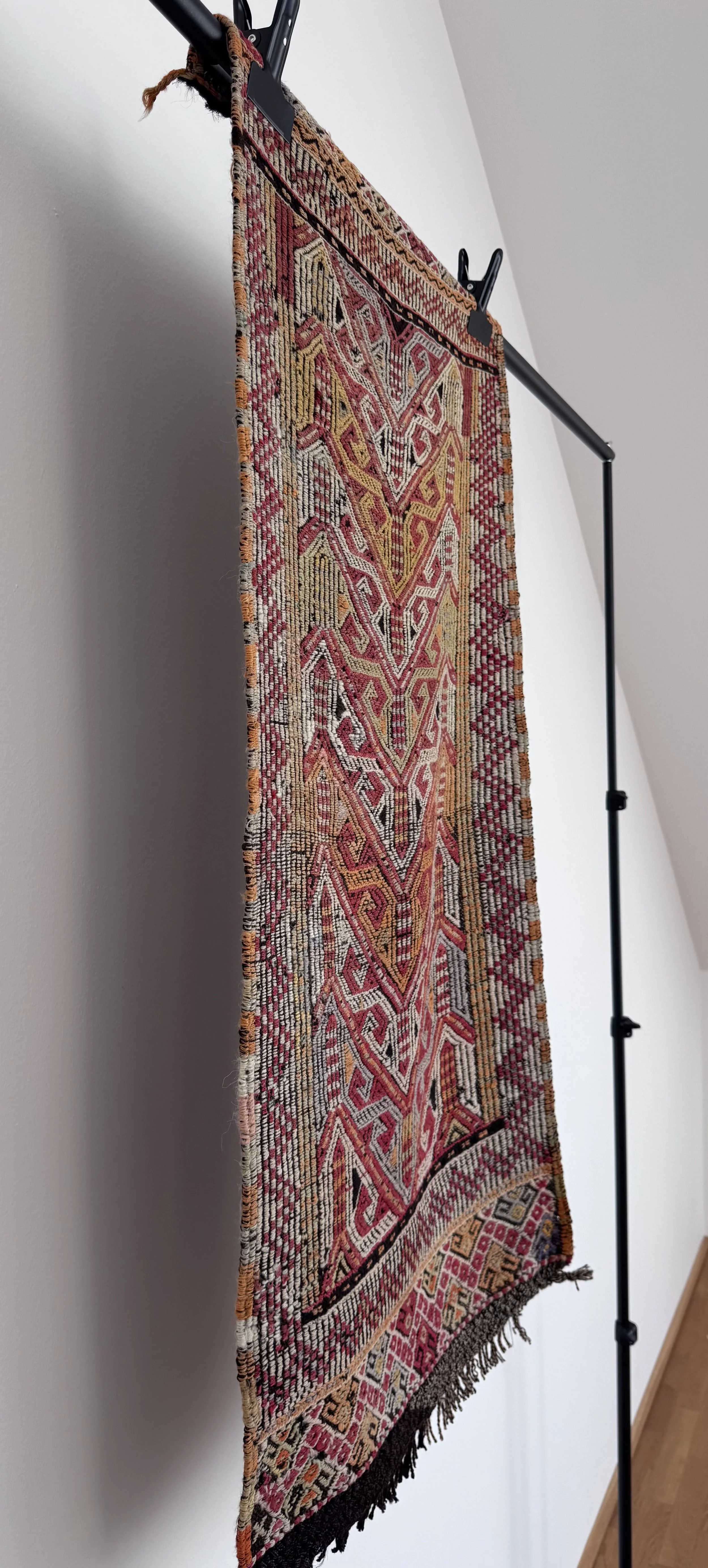
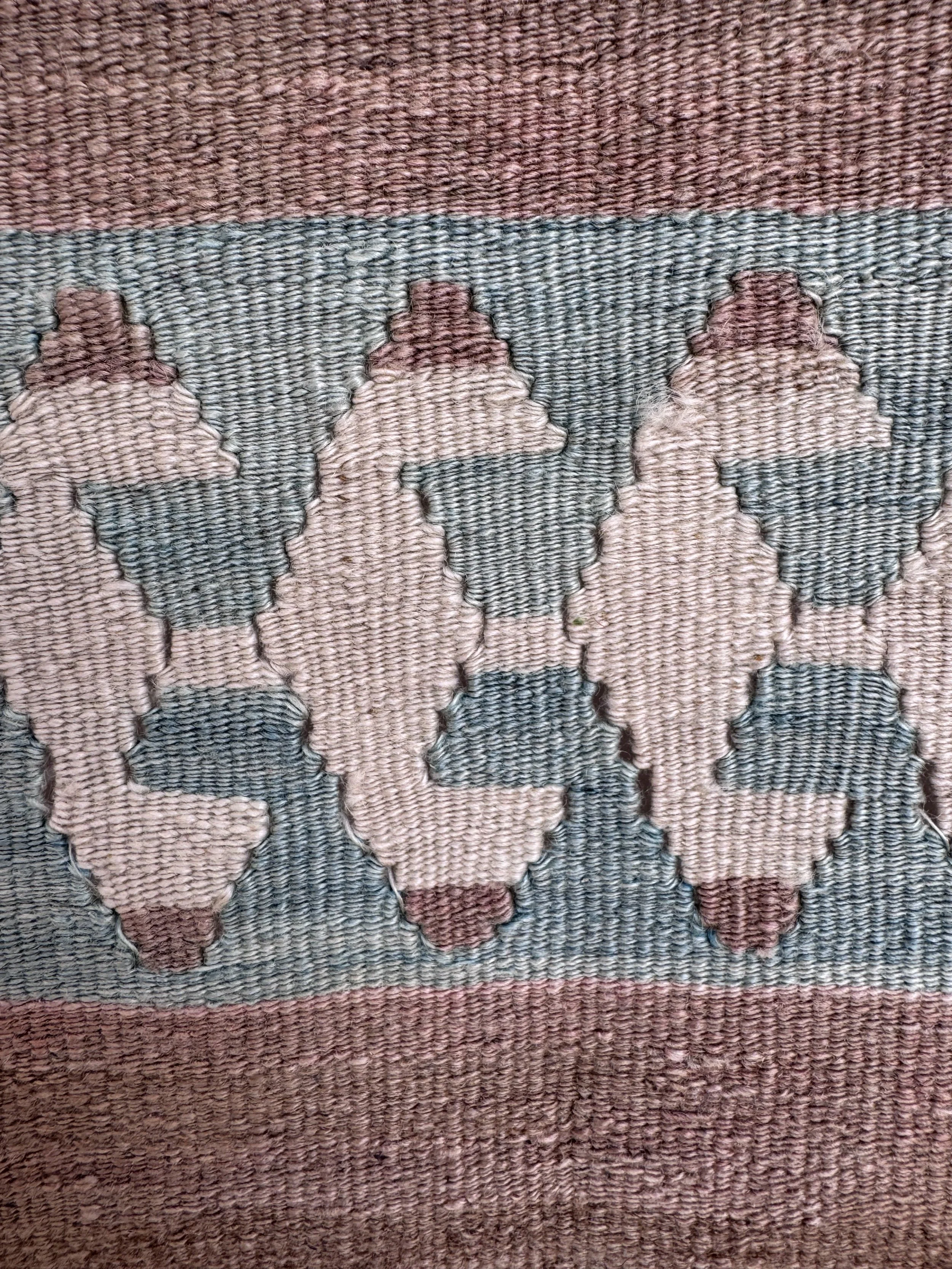 Image 2 of 4
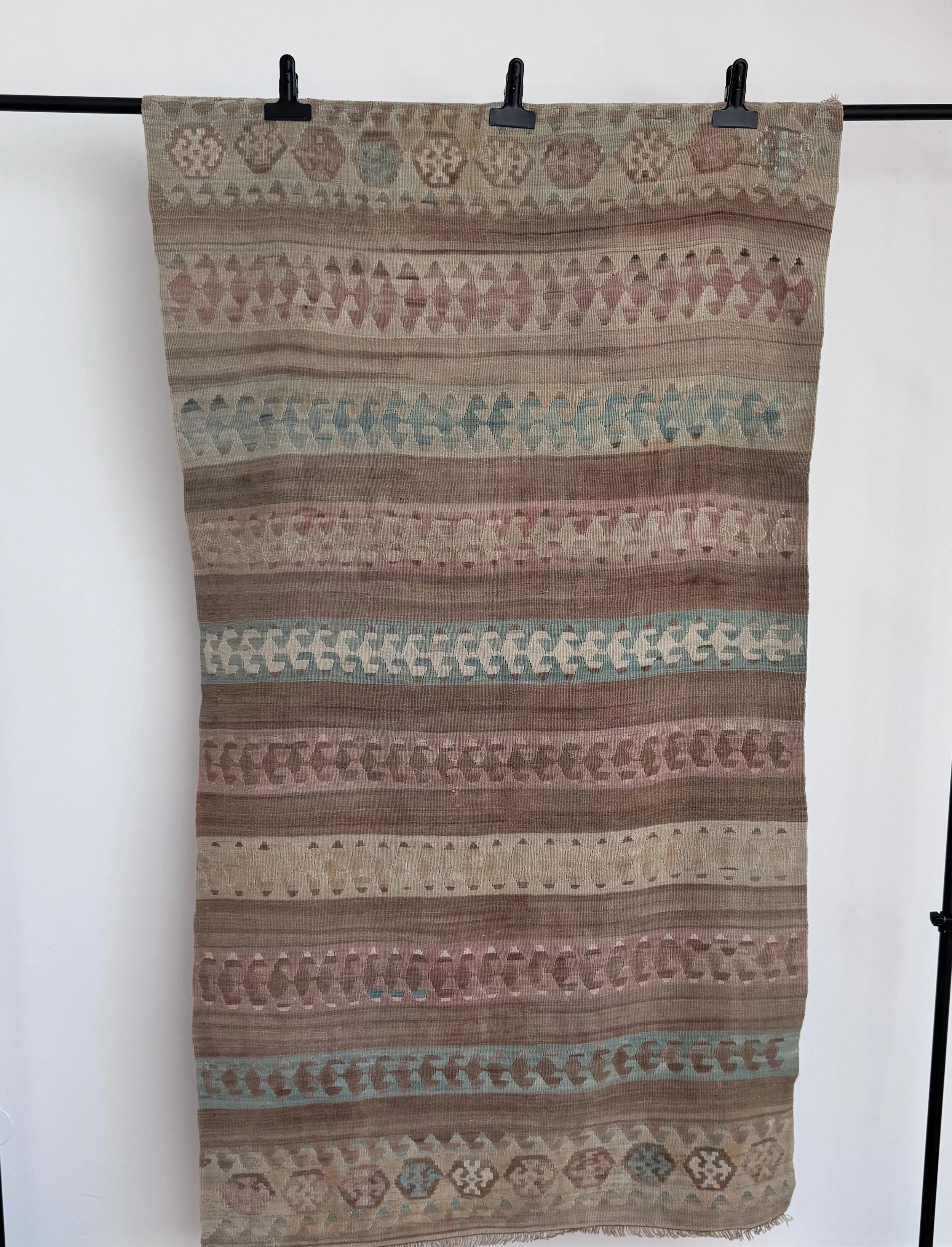
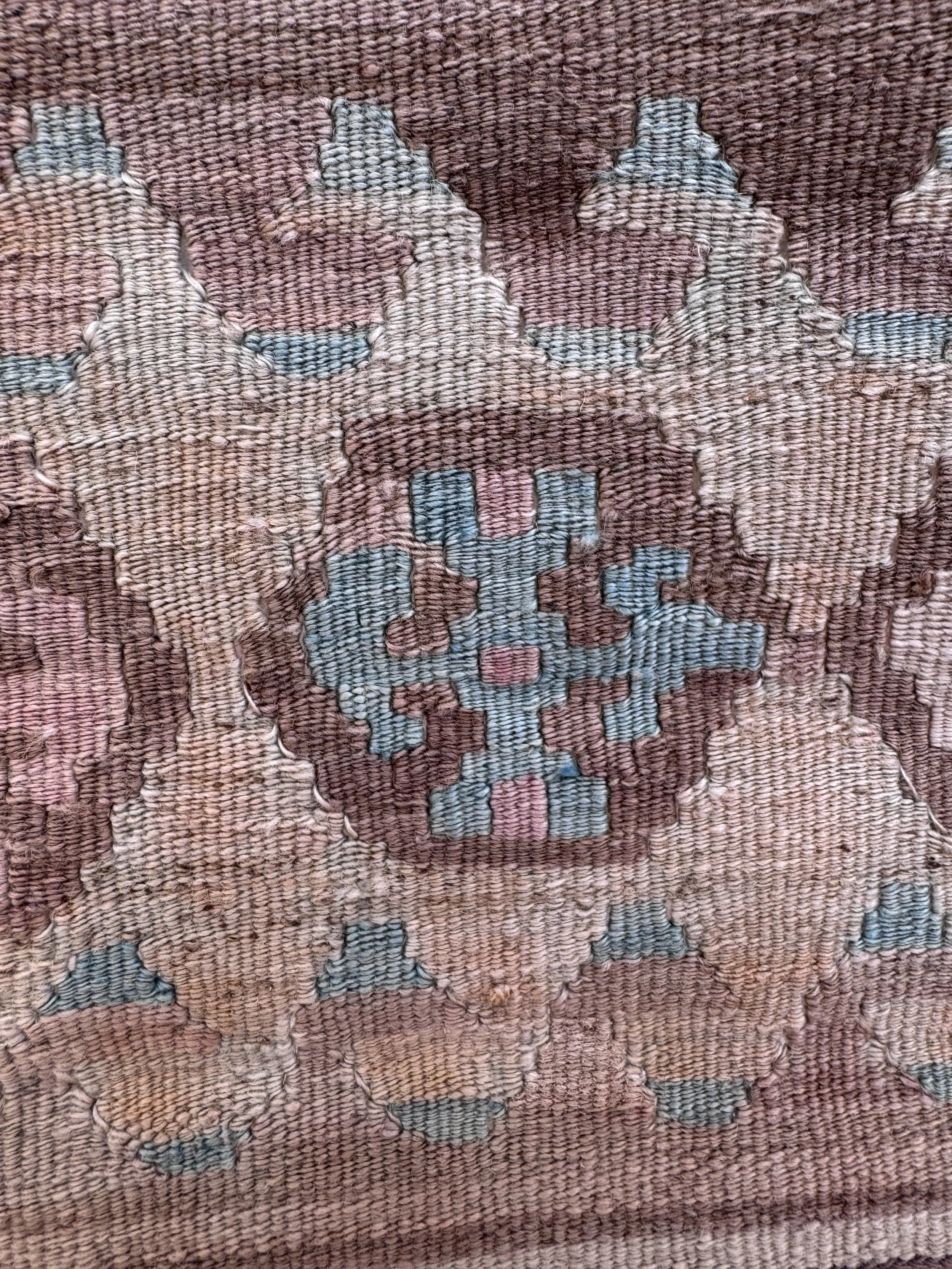 Image 3 of 4
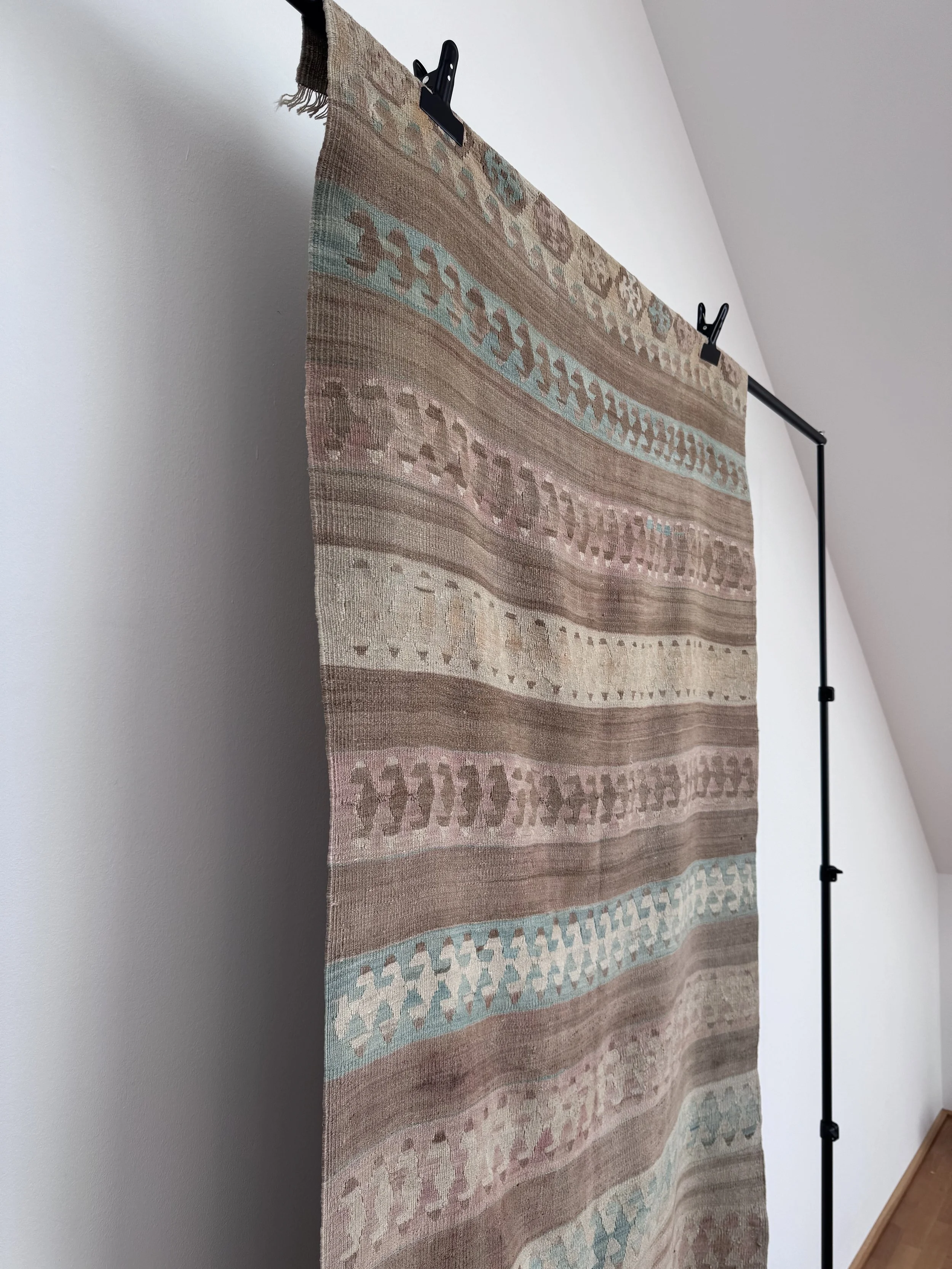 Image 4 of 4
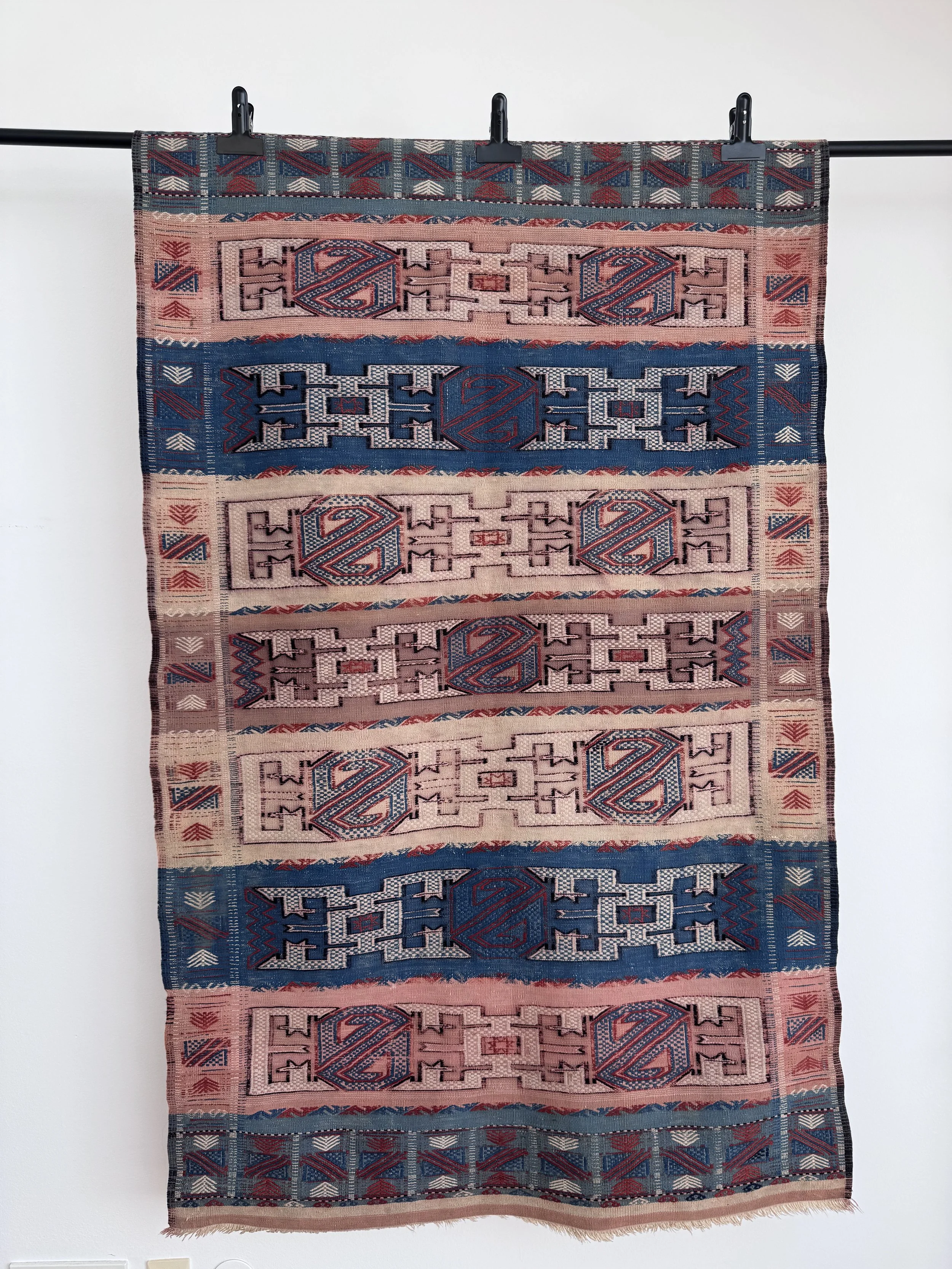
≈ 202 × 110 cm
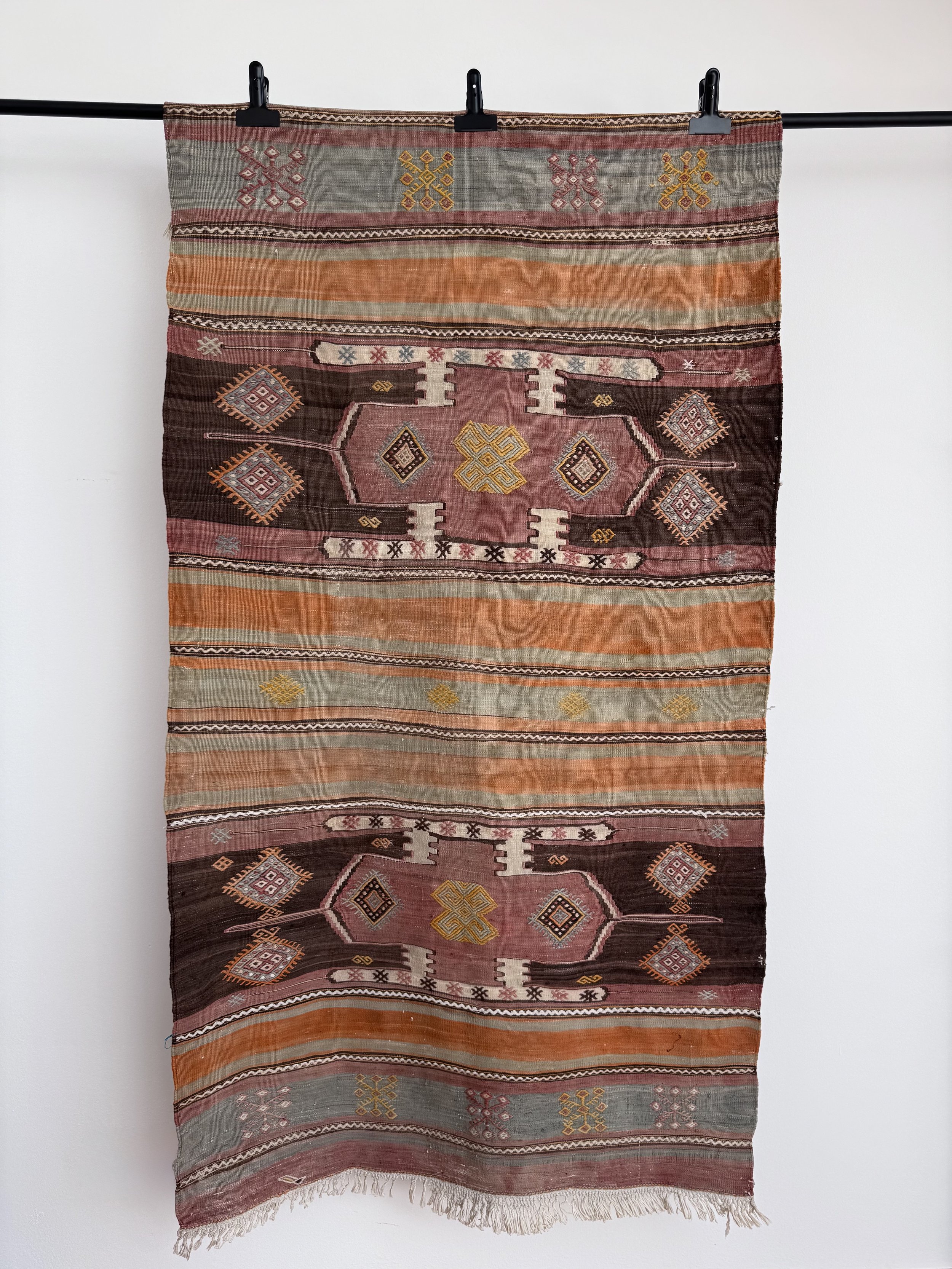
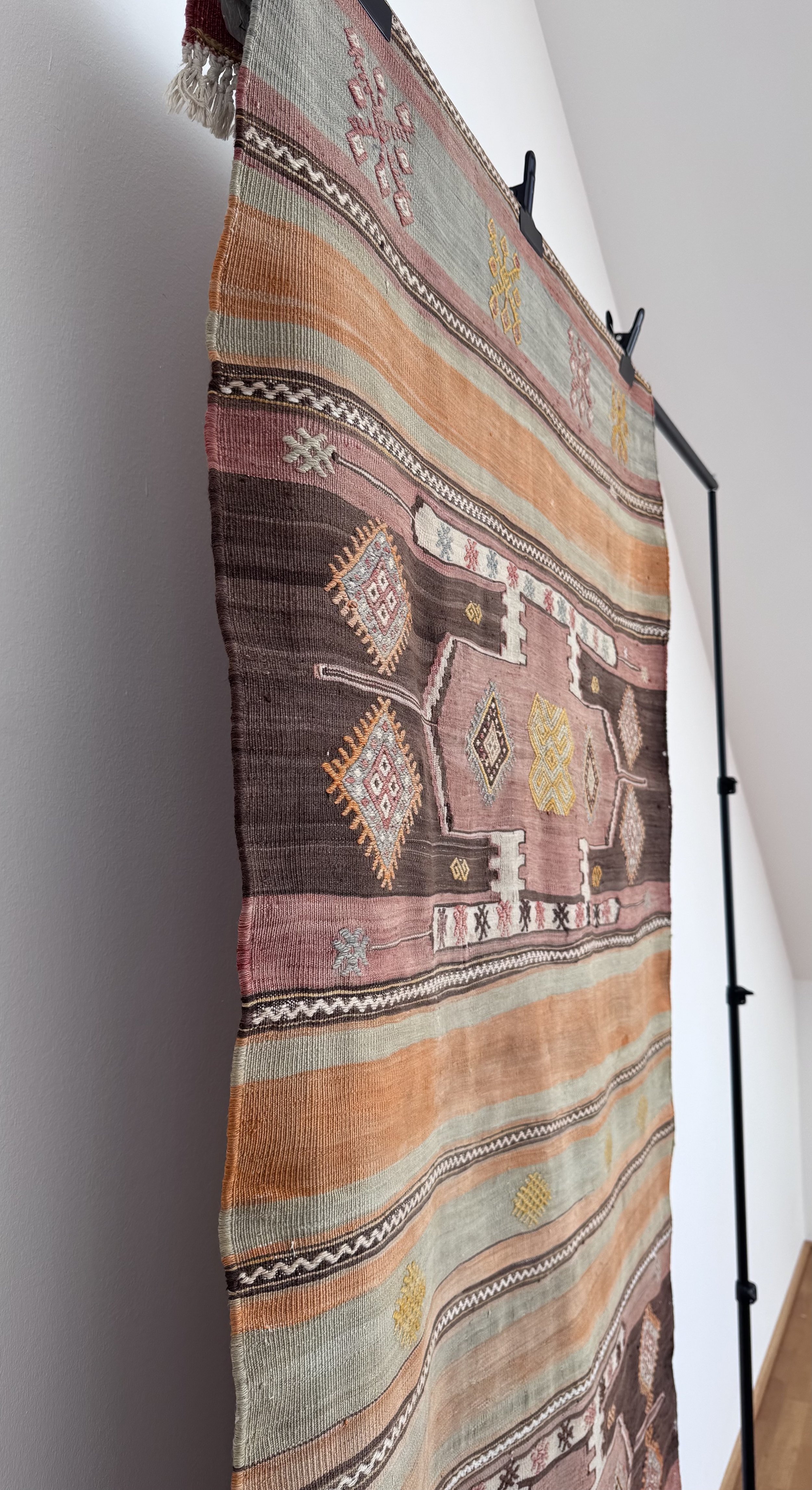
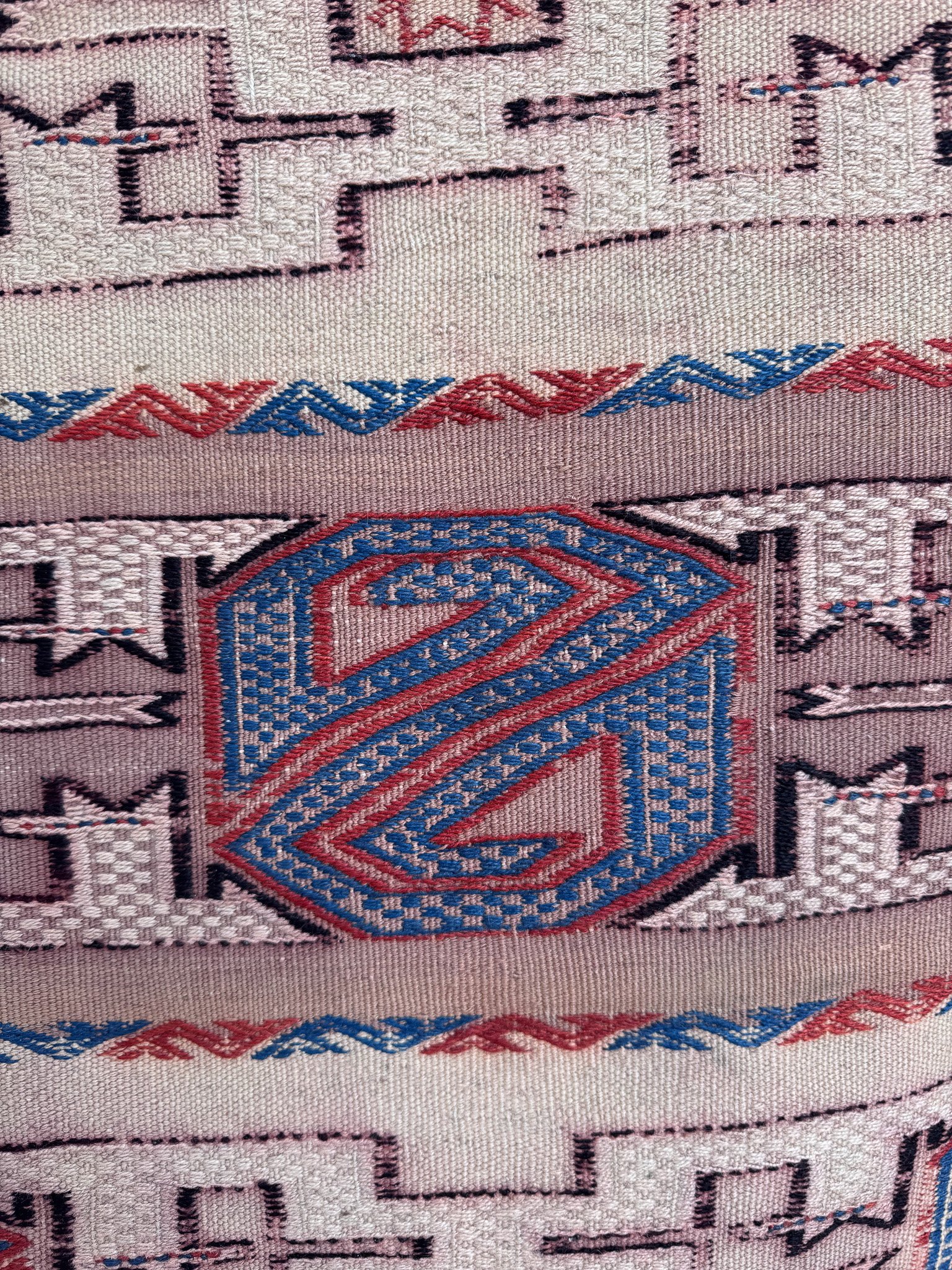
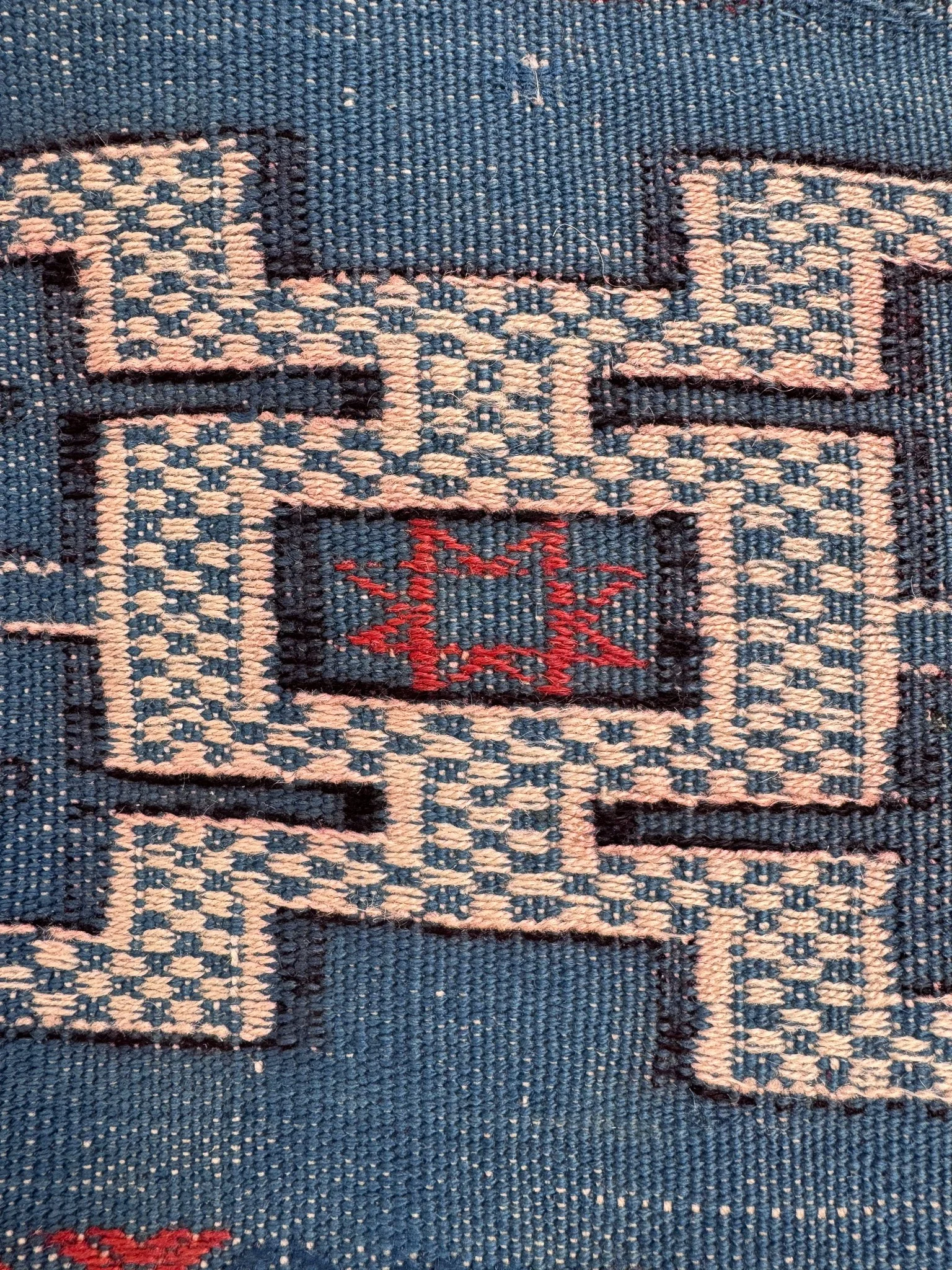
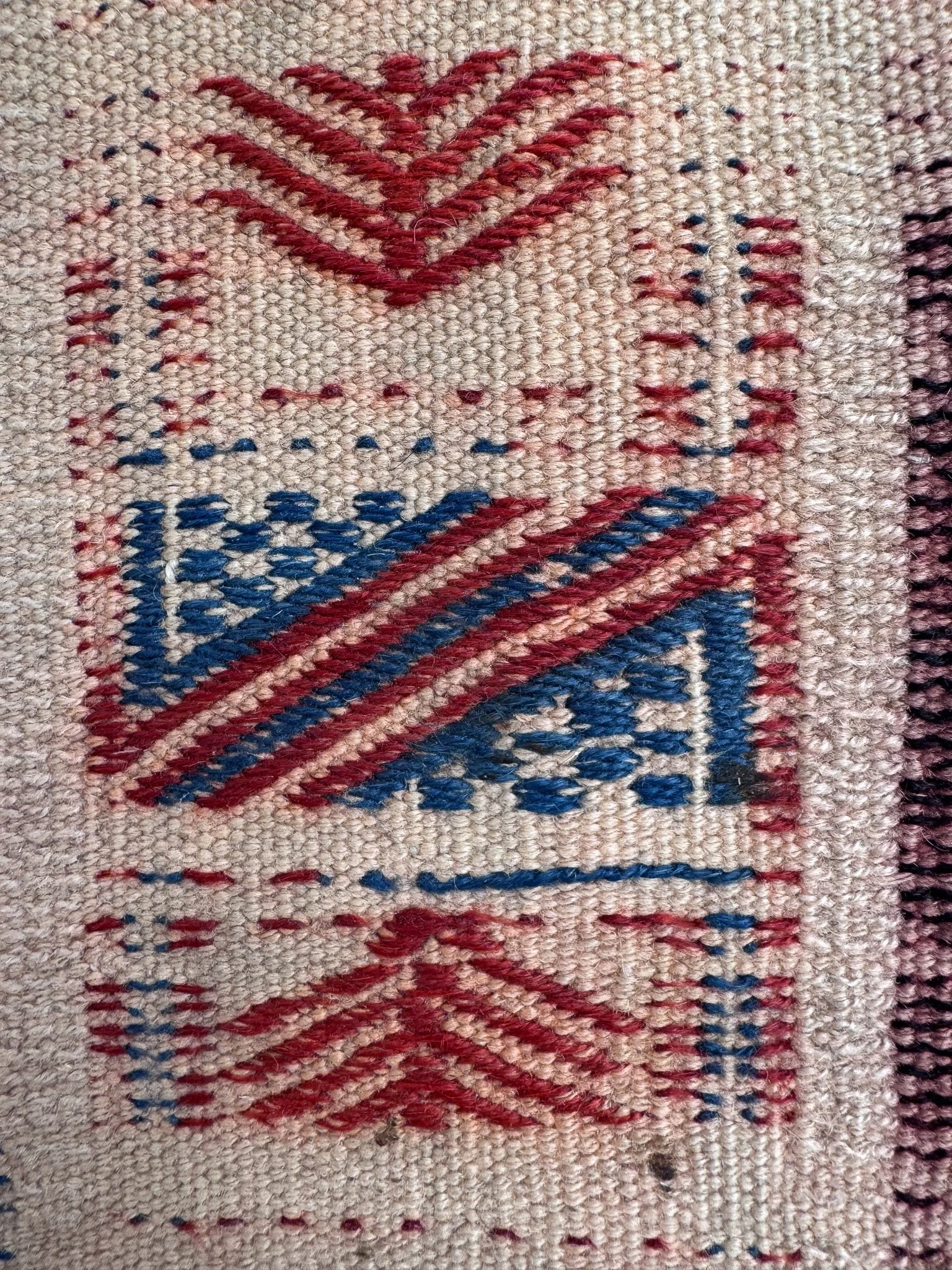
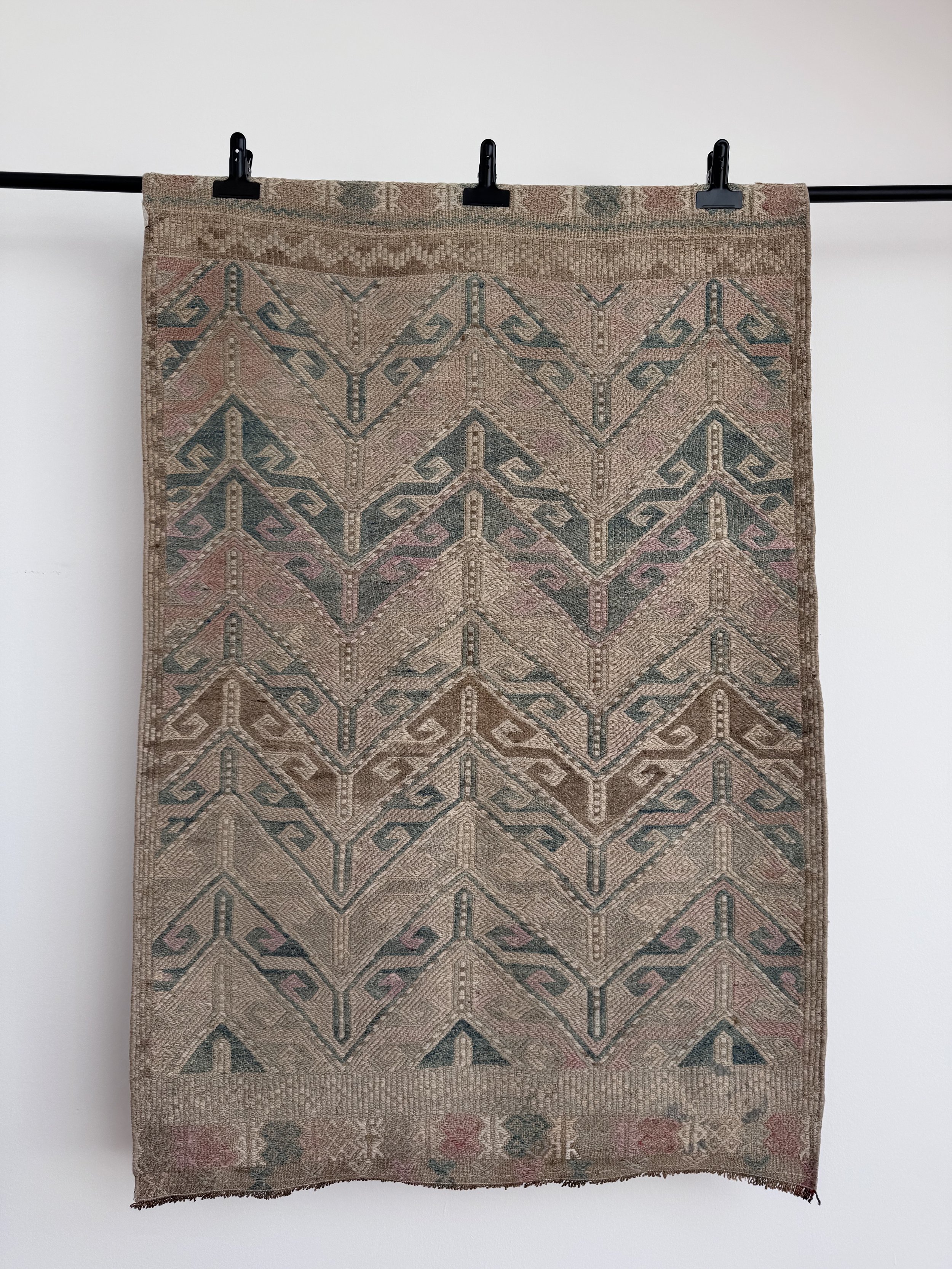
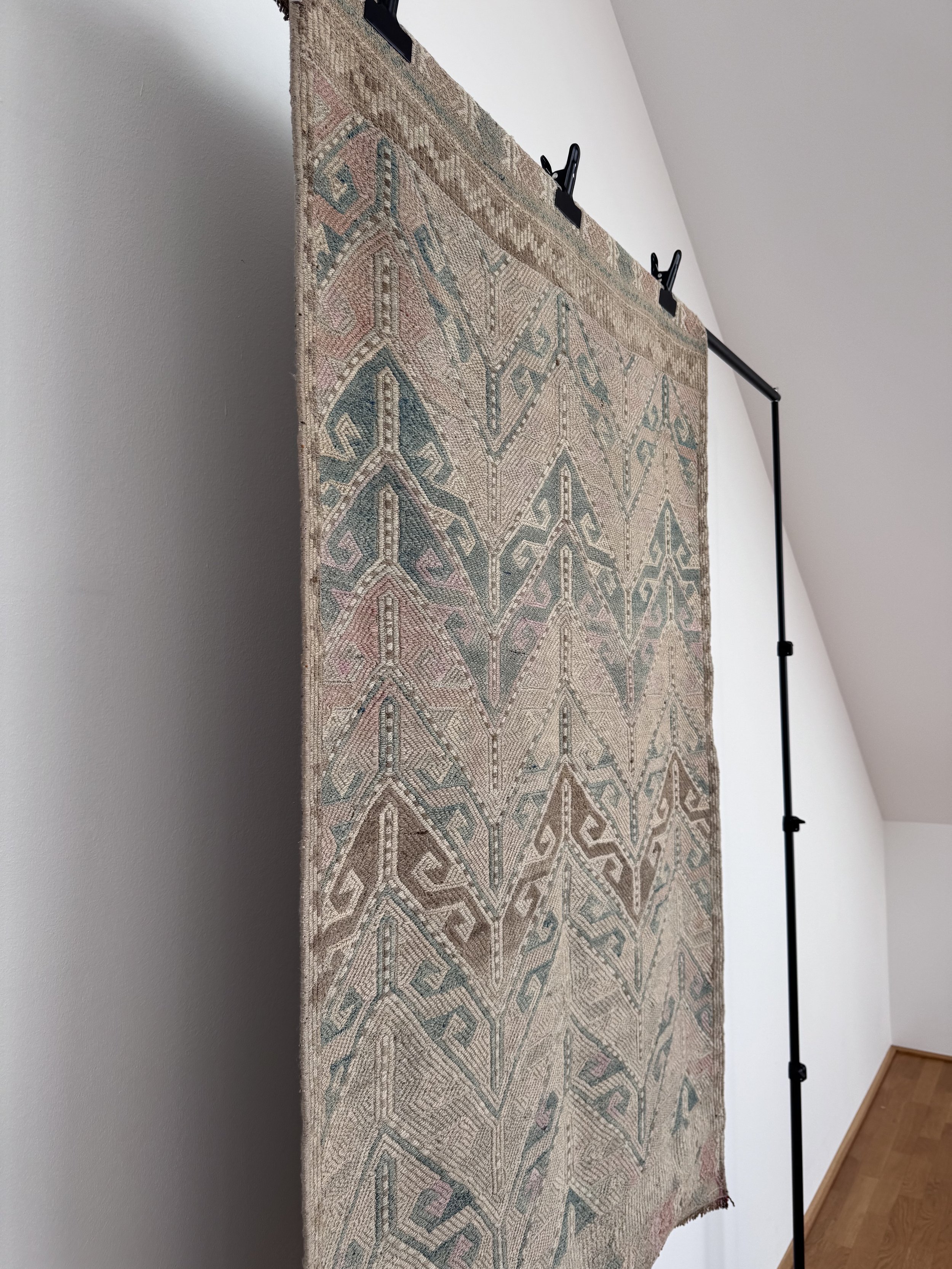
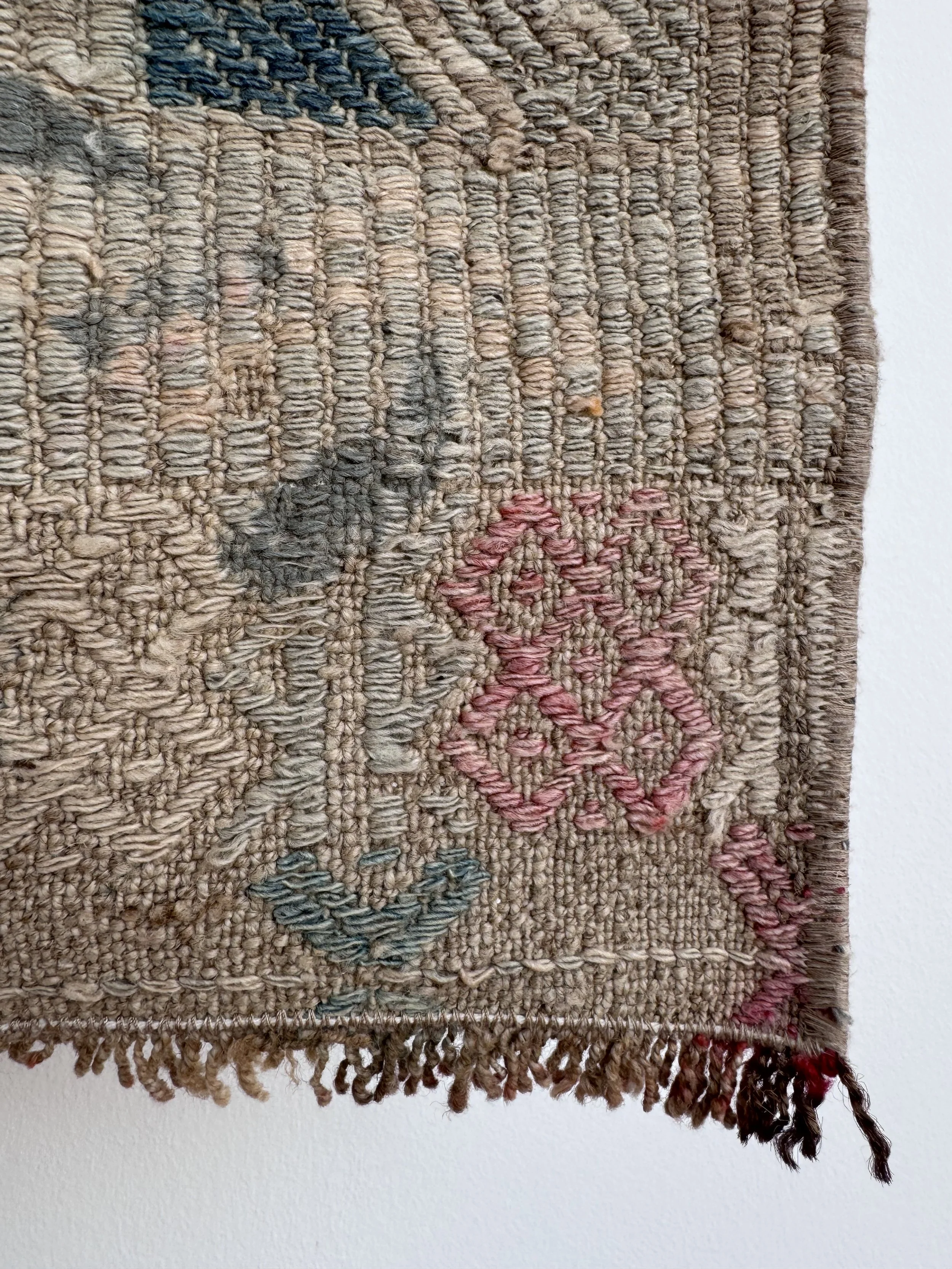
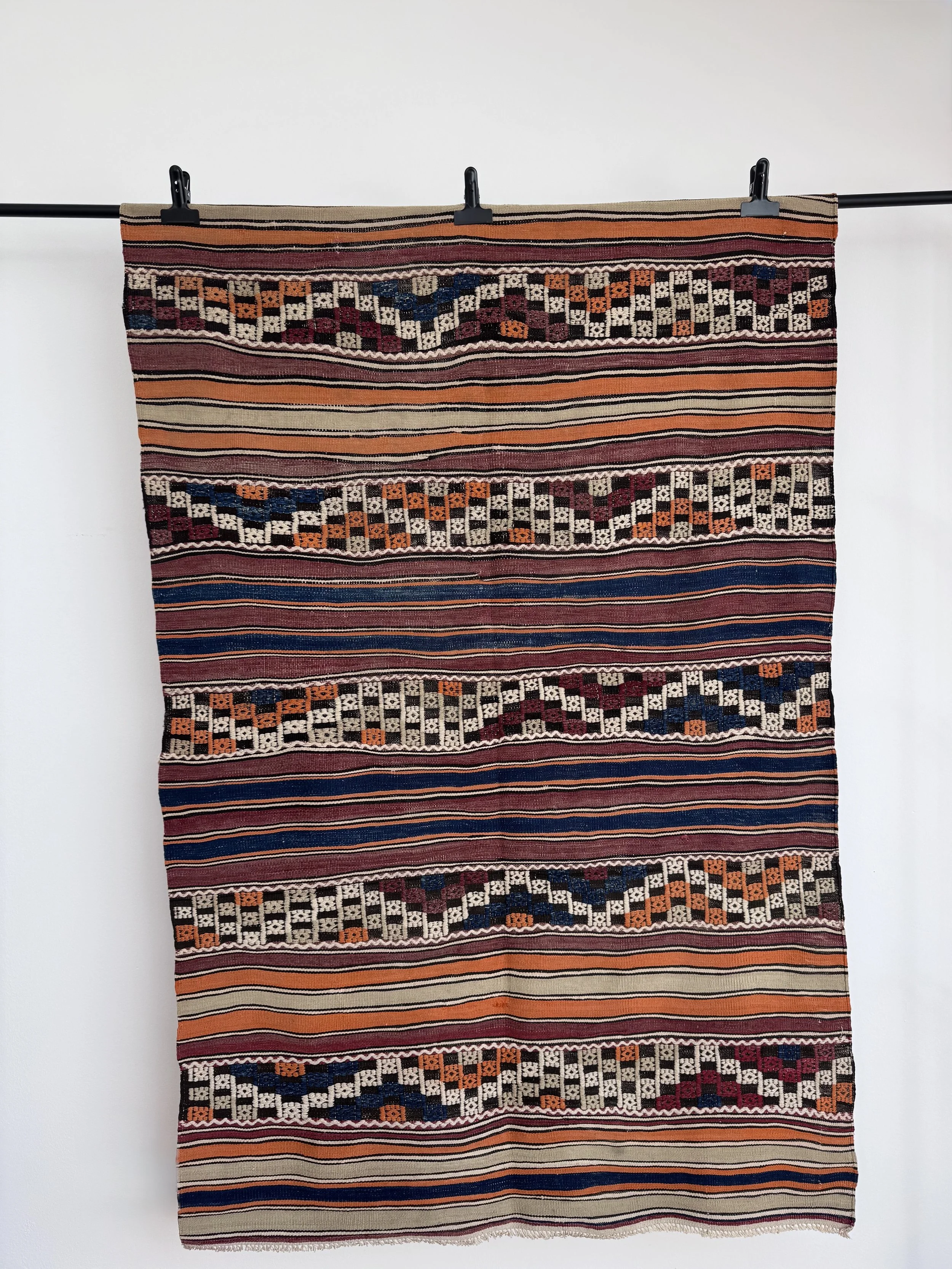
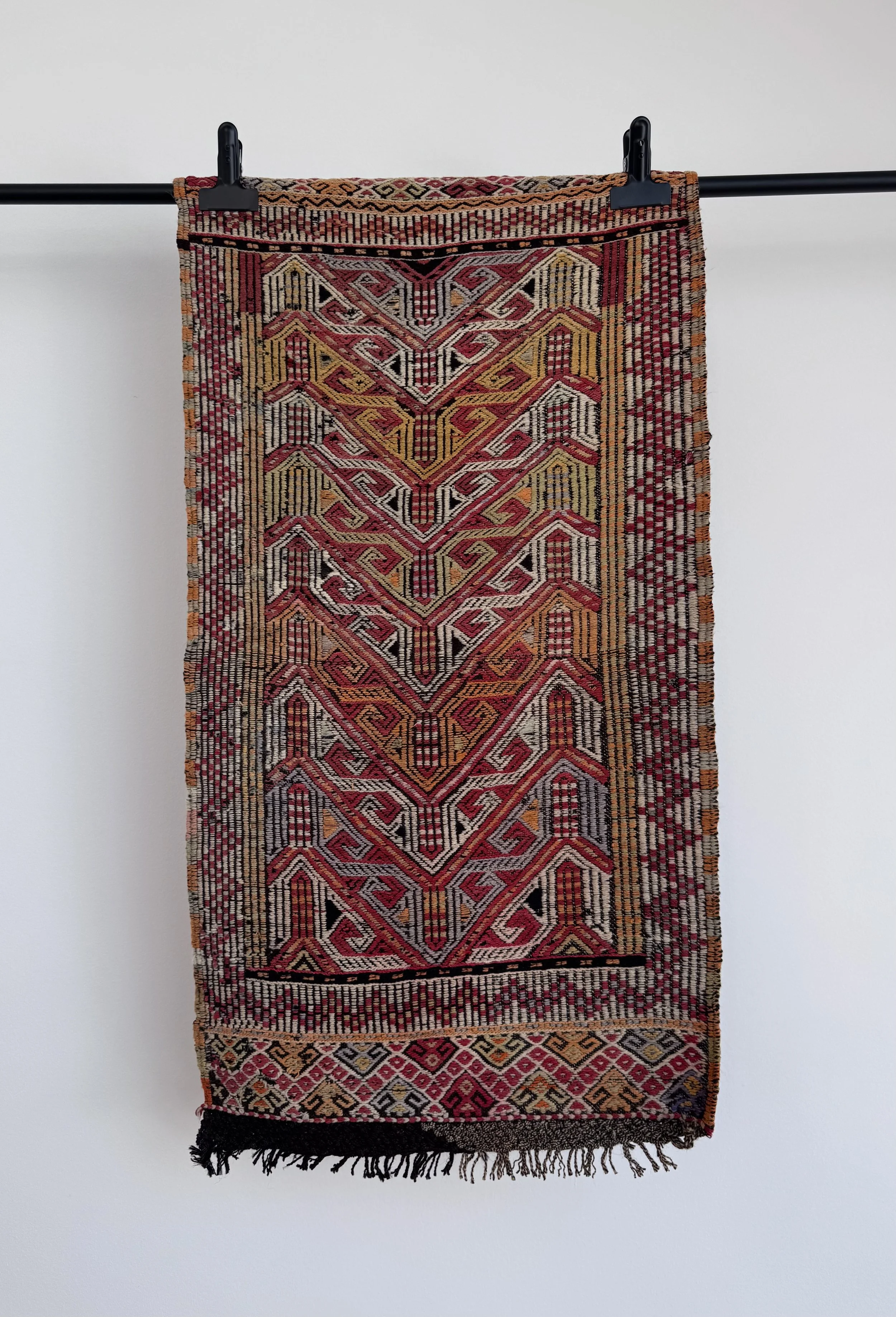
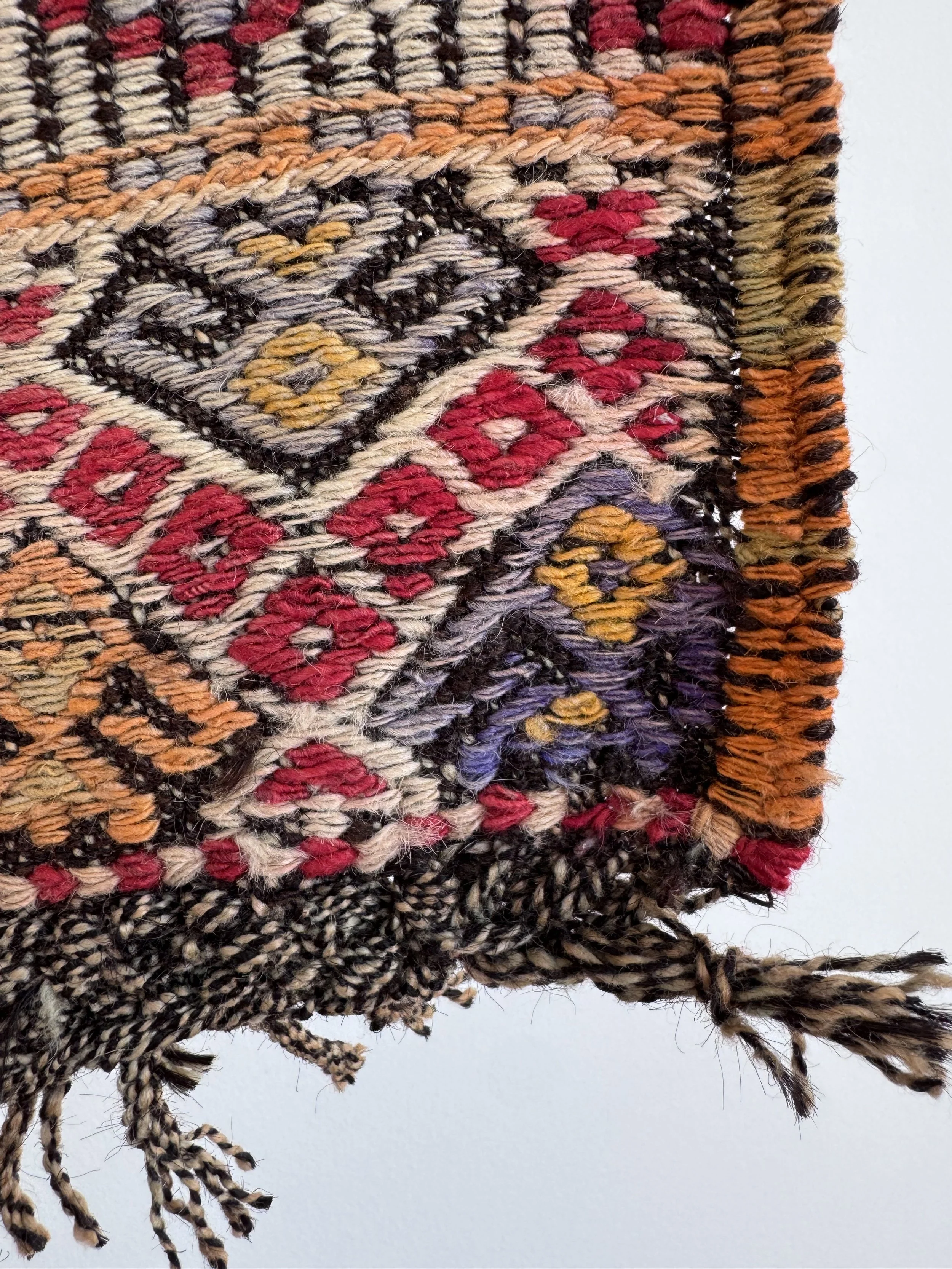
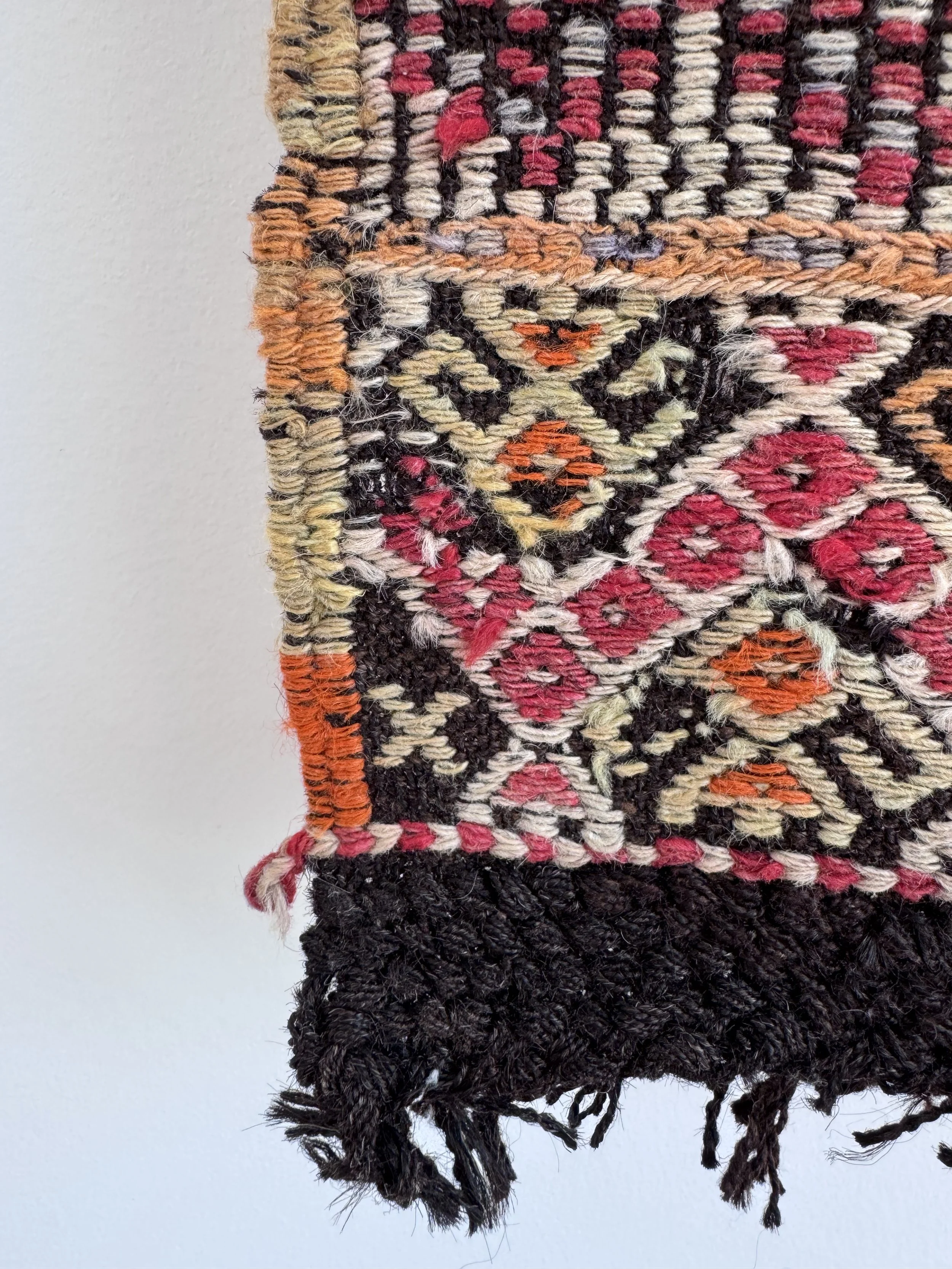
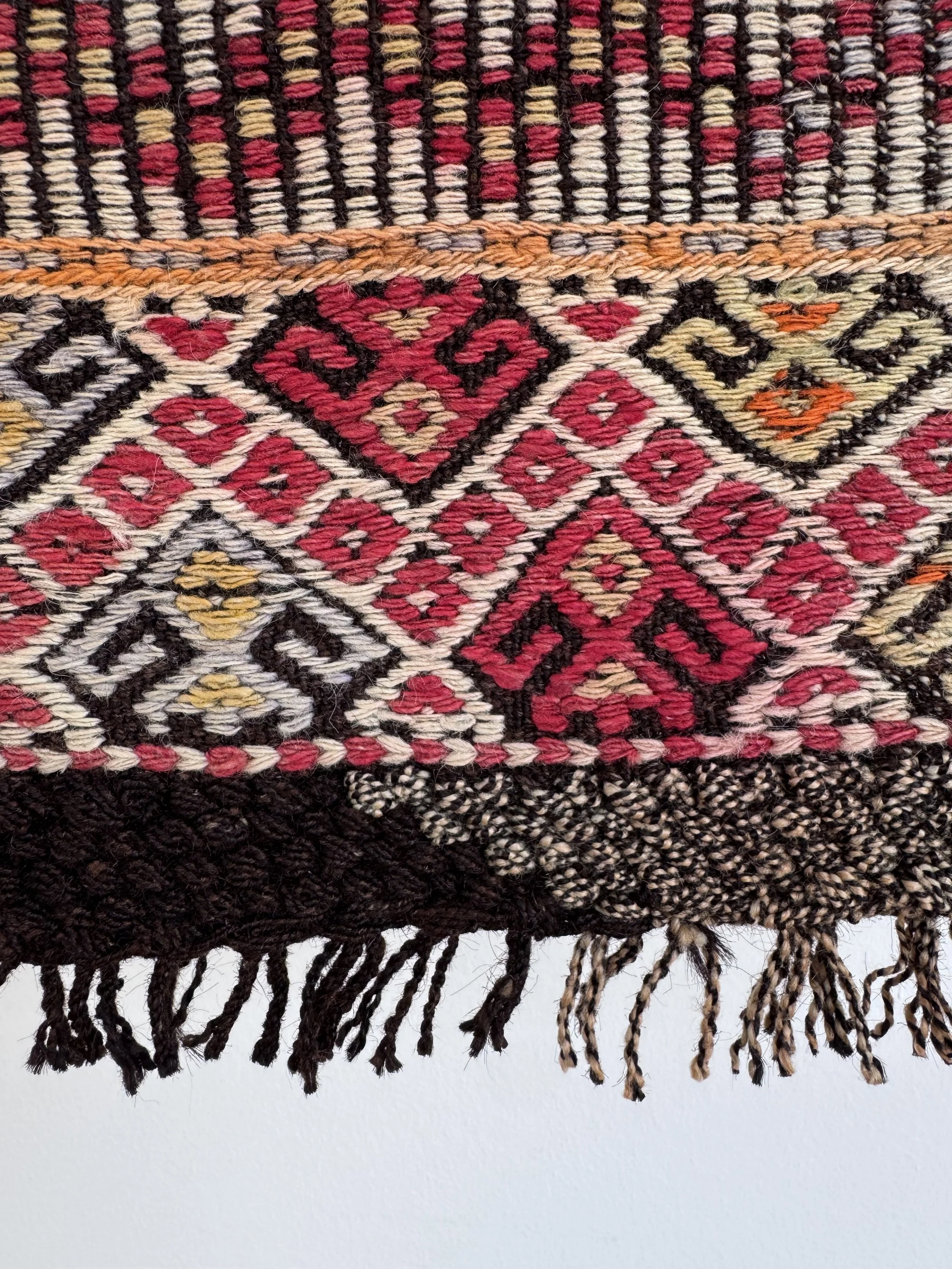
Time has asked nothing of this kilim except patience — and it has given everything back in softness. Horizontal stripe bands in warm grey-brown, faded rose and celadon green move across the surface like slow water. Between them, repeating S-bands and hexagonal gül forms — ancient tribal markers, woven so quietly here you almost miss them.
Almost.
Handcrafted in Taşpınar (Turkey)
Vintage — early to mid-20th century
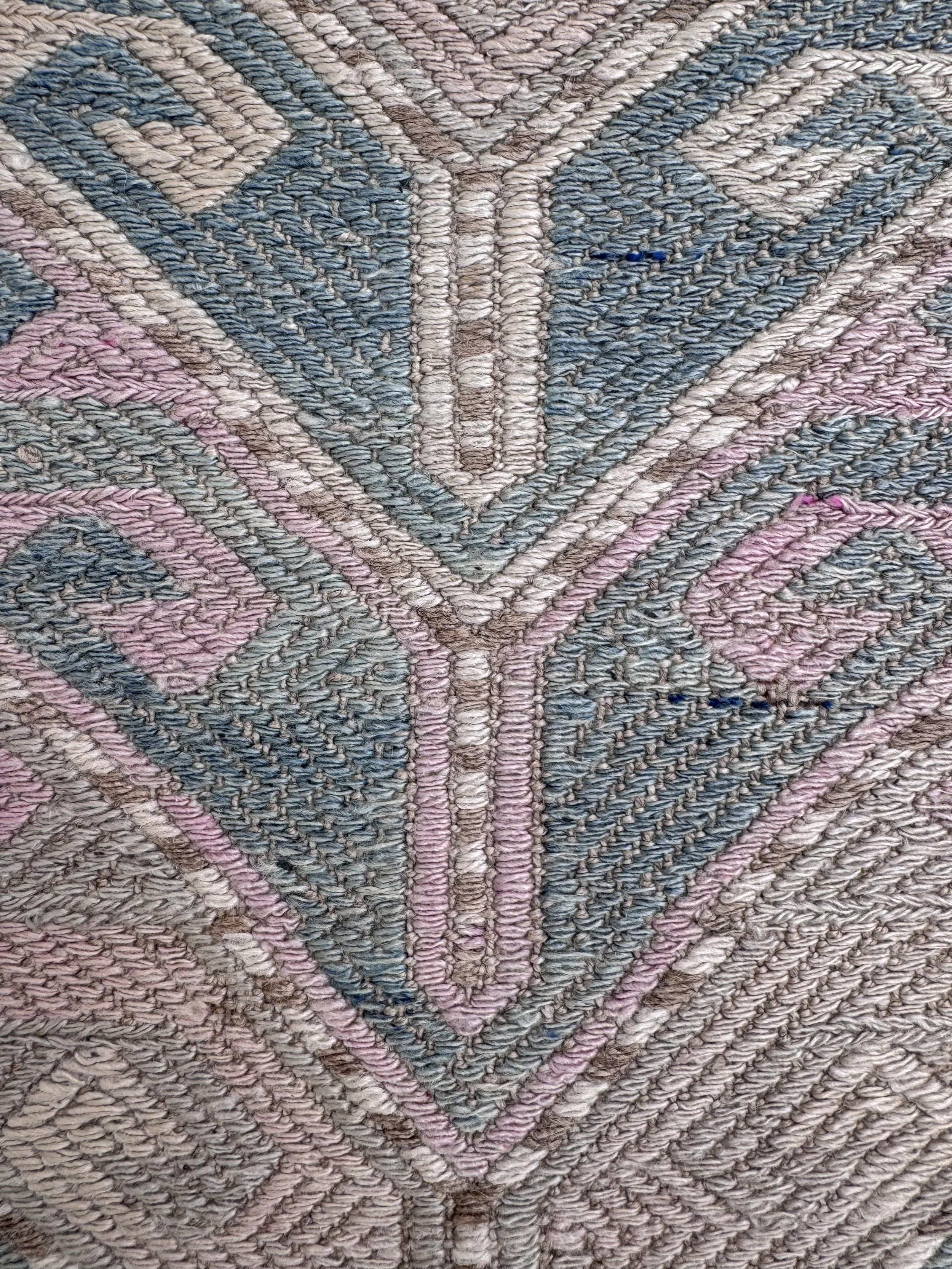
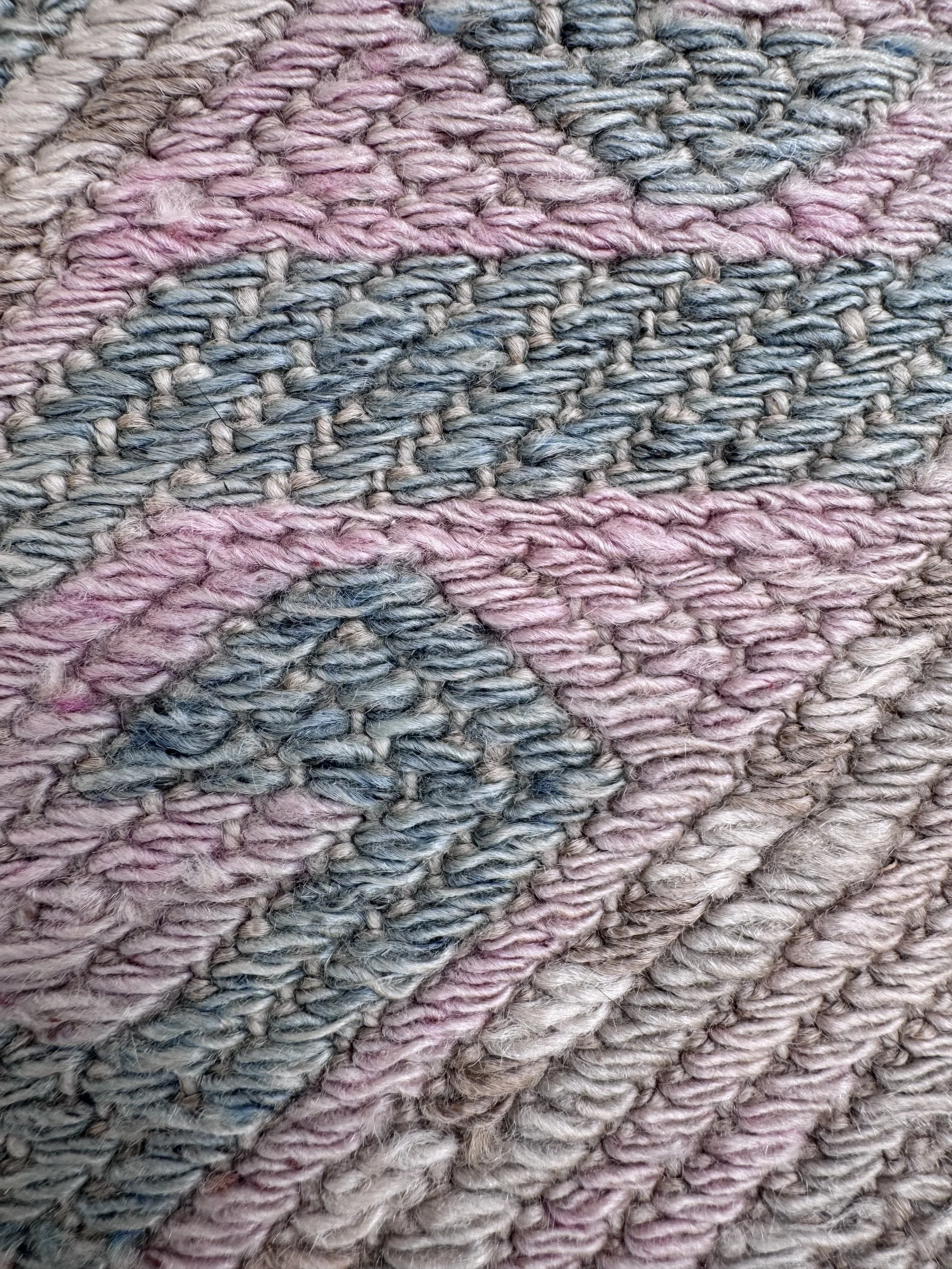
Naturally dyed — the palette has deepened and harmonized over decades
Colors: warm grey-brown, faded rose, celadon, cream
One of a kind — never repeated, never mass-produced
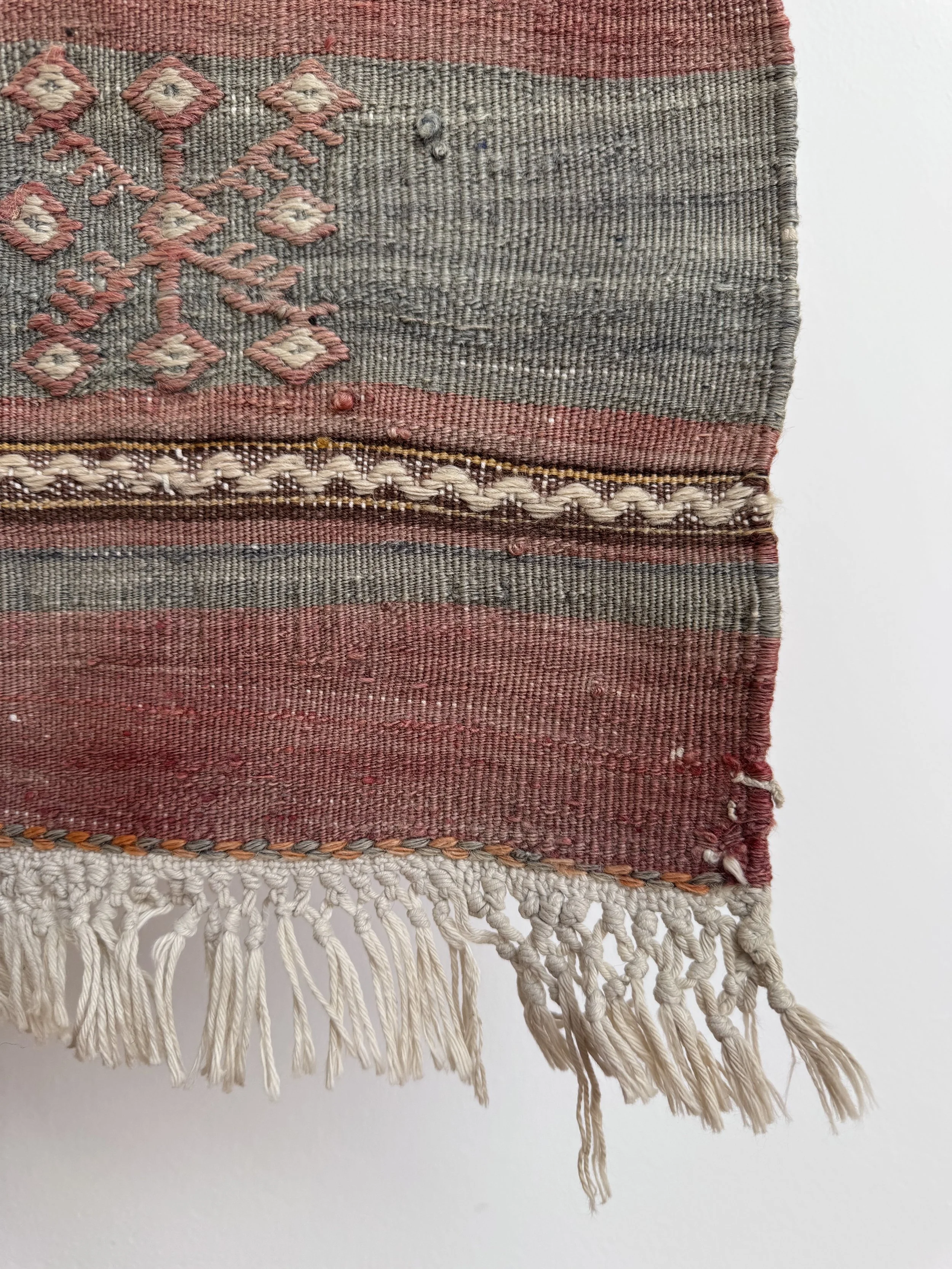
Fine wool, built to last generations
A piece for people who don't need a room to shout.
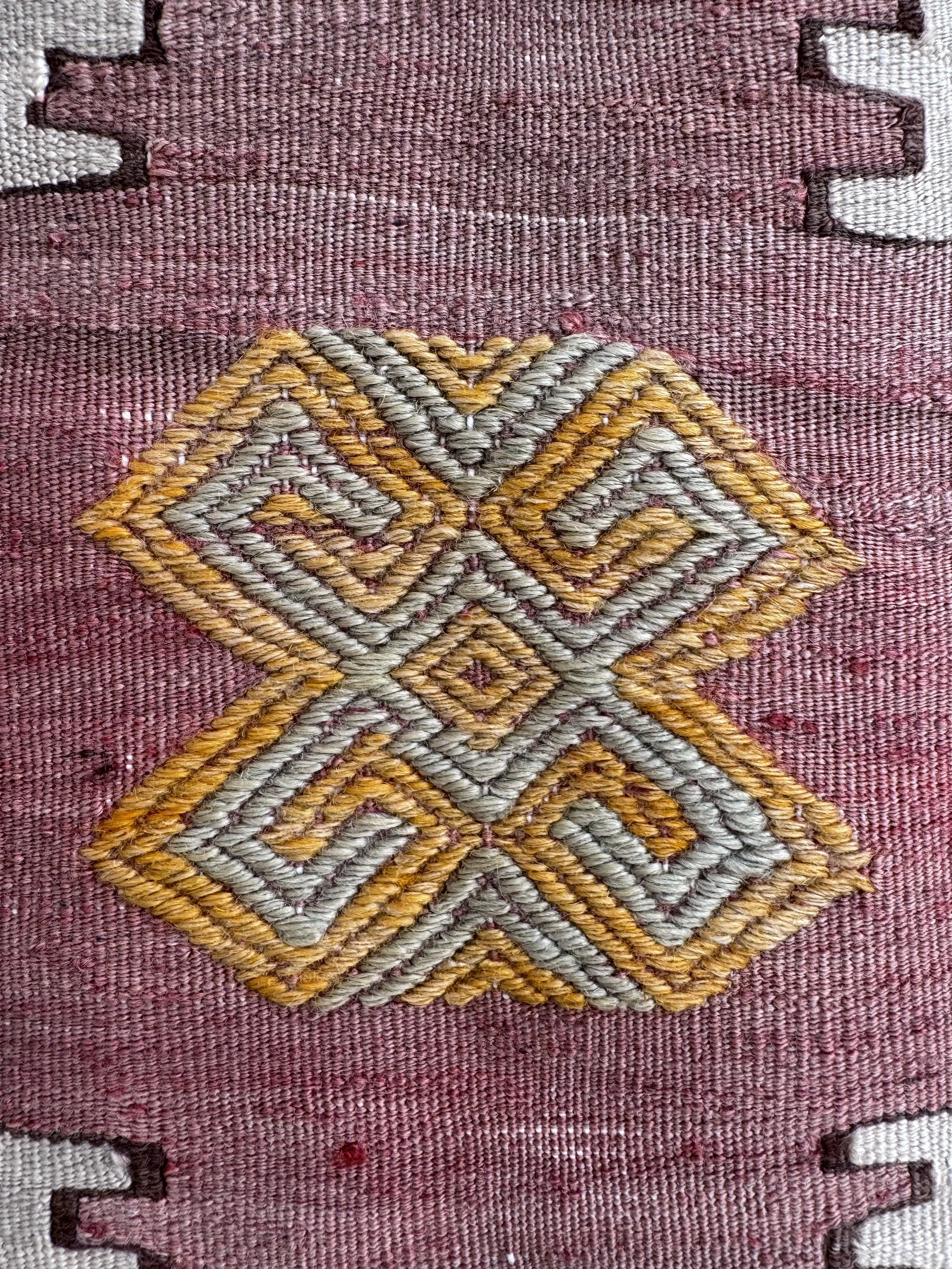
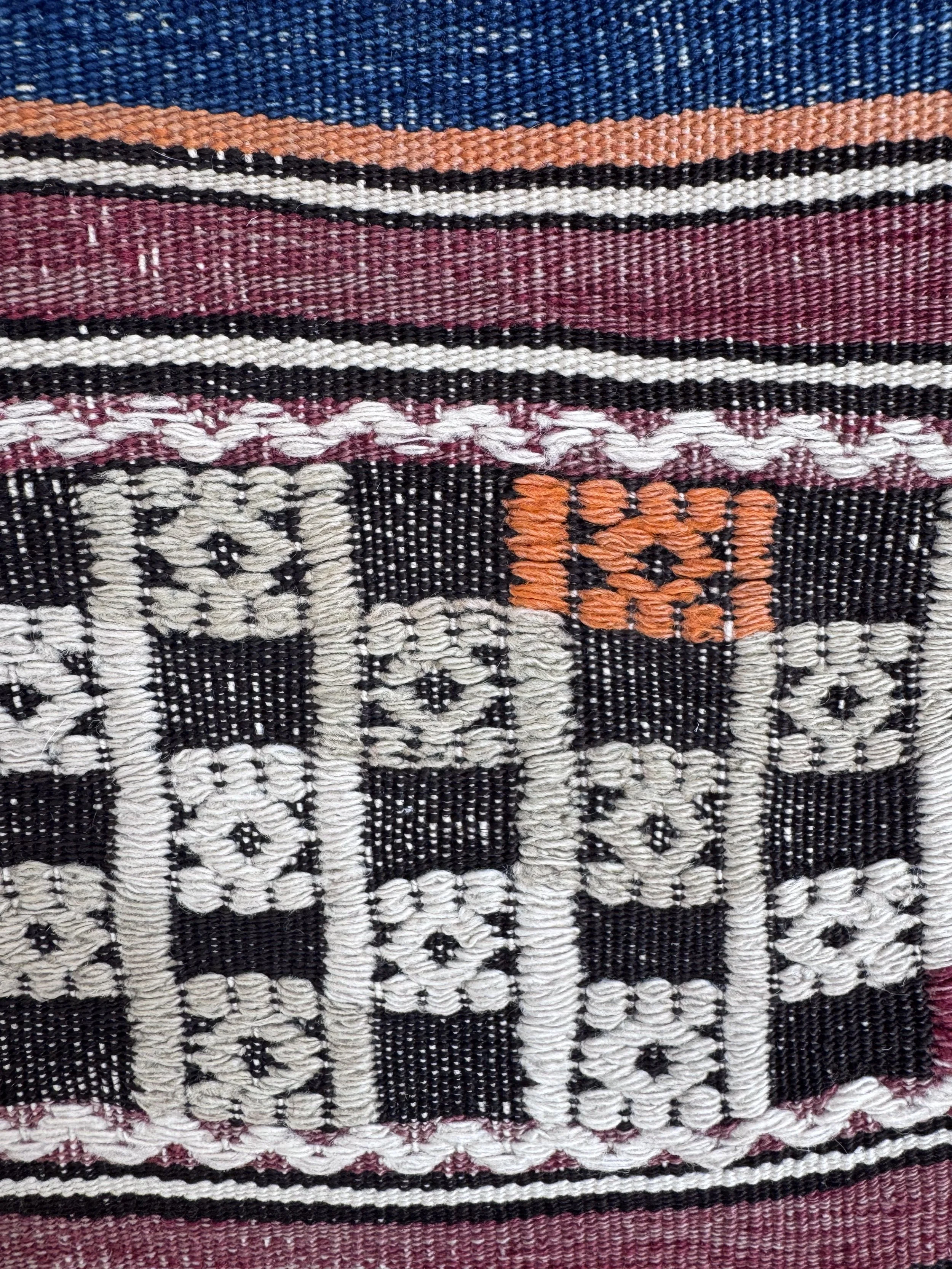
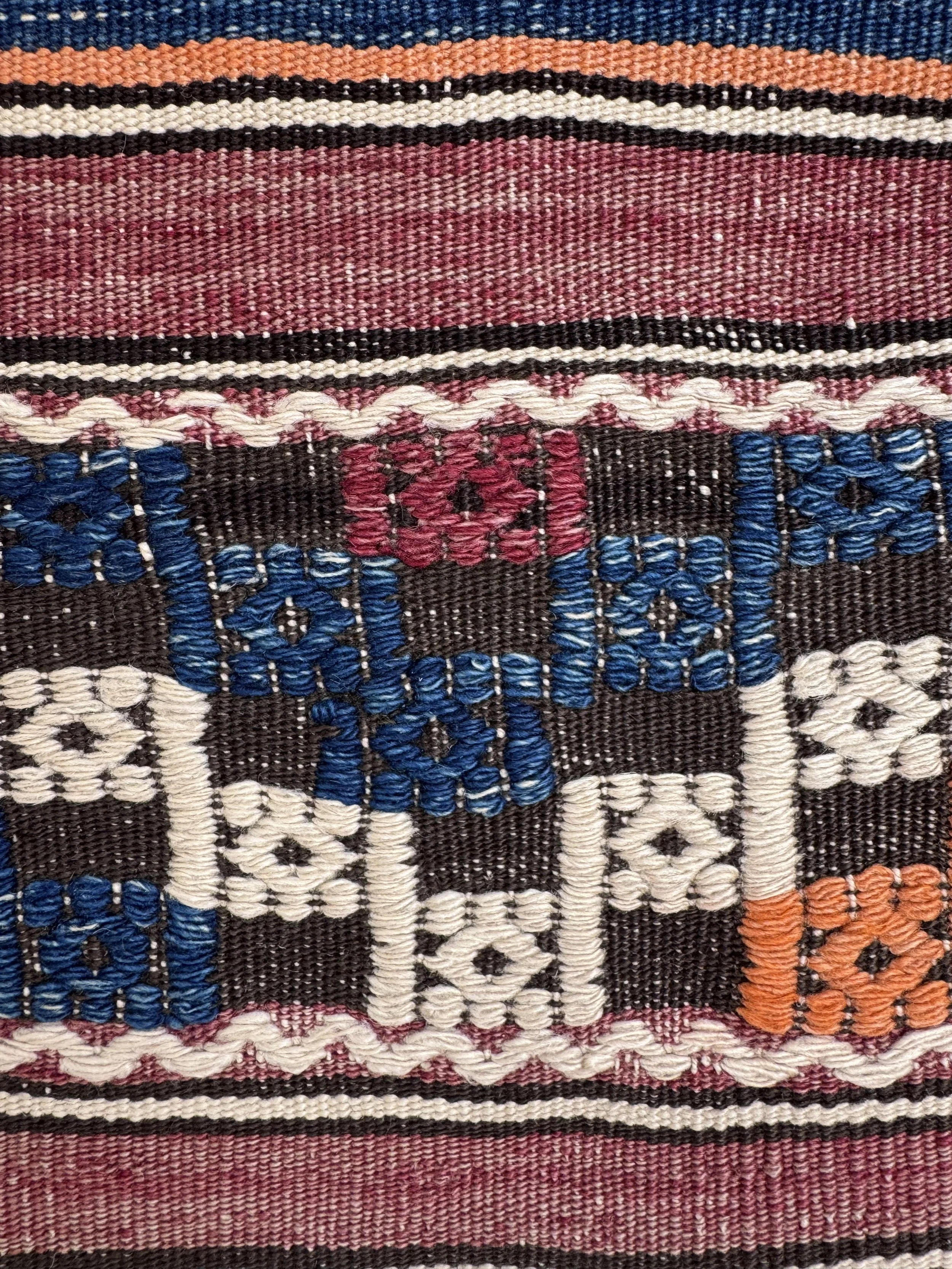
Dominating motif: S-band (amulet motif) — Running through nearly every stripe, the S-form is one of the oldest protective symbols in Anatolian weaving. Placed horizontally it symbolizes eternal life and infinity; placed vertically, wealth, fertility and protection from the evil eye. These weren't decorative choices — they were believed to carry real protective force
≈ 202 × 110 cm
Time has asked nothing of this kilim except patience — and it has given everything back in softness. Horizontal stripe bands in warm grey-brown, faded rose and celadon green move across the surface like slow water. Between them, repeating S-bands and hexagonal gül forms — ancient tribal markers, woven so quietly here you almost miss them.
Almost.
Handcrafted in Taşpınar (Turkey)
Vintage — early to mid-20th century
Naturally dyed — the palette has deepened and harmonized over decades
Colors: warm grey-brown, faded rose, celadon, cream
One of a kind — never repeated, never mass-produced
Fine wool, built to last generations
A piece for people who don't need a room to shout.
Dominating motif: S-band (amulet motif) — Running through nearly every stripe, the S-form is one of the oldest protective symbols in Anatolian weaving. Placed horizontally it symbolizes eternal life and infinity; placed vertically, wealth, fertility and protection from the evil eye. These weren't decorative choices — they were believed to carry real protective force